What Will I Look Like If I Lose Weight? AI Photos vs Reality
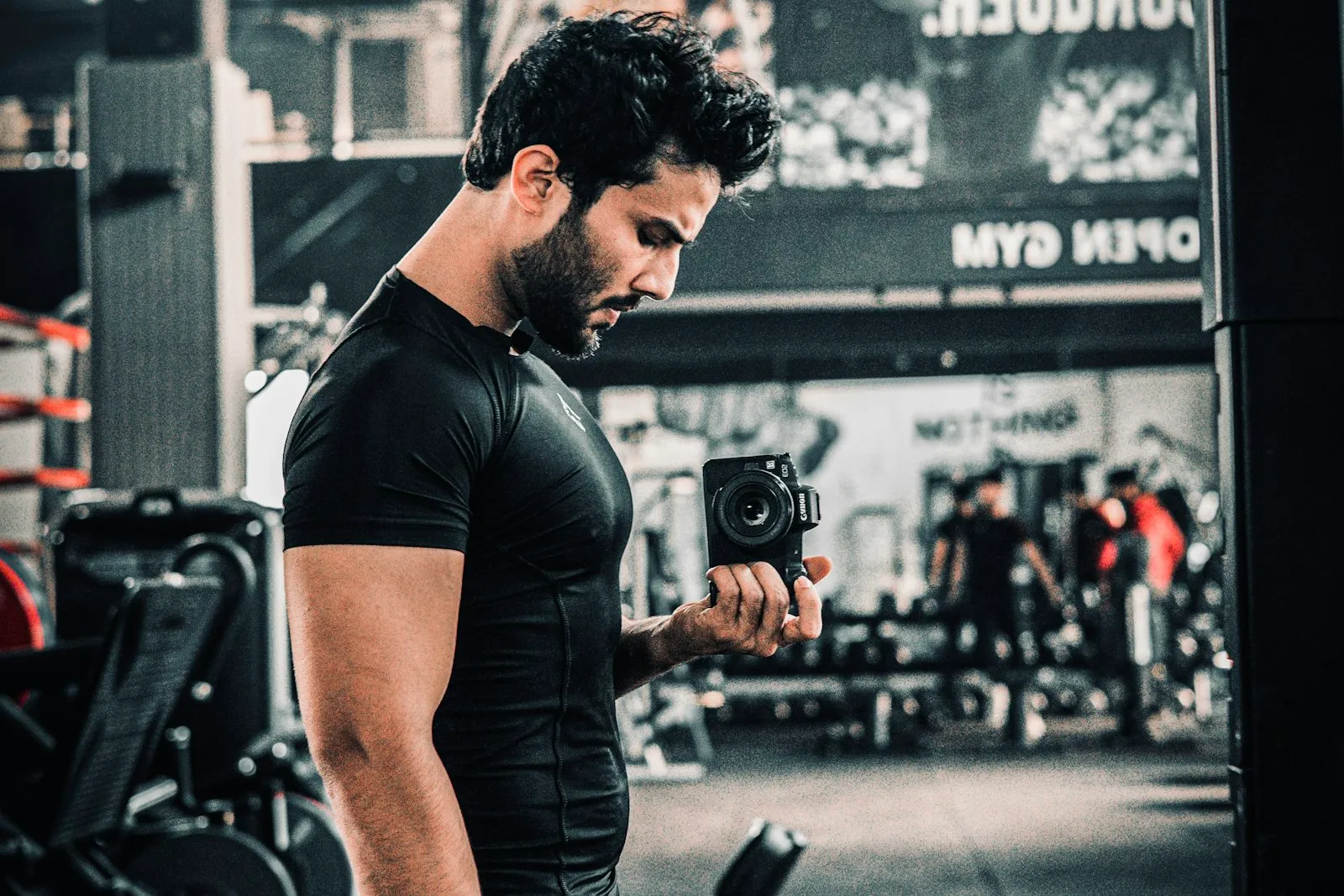
What your body can really change in 3 to 12 months, what shows first when you lose weight, and why AI body transformation photos are often unrealistic.
Upload a photo, pick “12 weeks”, get a version of yourself with visible abs and bigger shoulders. AI body transformation generators and weight loss simulators are fun, and some people find them motivating. The problem is that most of them have no idea what your body can do in 12 weeks. They produce a nice image, not a physiological estimate.
The short answer: if you lose weight at a sustainable pace (about 0.5 to 1% of your body weight per week), you’ll usually see a slimmer face and waist first, once you’ve lost roughly 4 to 5% of your weight, then more definition in the shoulders, arms and back, with stubborn areas changing last. In 3 months, that’s typically 4 to 7 kg (9 to 15 lb) for someone starting at 80 kg (176 lb); in 6 months, roughly twice that. How you look at the end depends as much on keeping your muscle as on the number on the scale. No photo app can predict the exact result, but an honest projection can show you a realistic range.
Below: what a body can realistically change between 3 and 12 months, what shows first, why so many generated “after” photos look alike, and a checklist for reading any projection. If you’d like to see that range for your own body, Titan Mode builds a projection from the numbers you enter, not from a guess based on your photo.
What changes first when you lose weight
You can’t choose where fat comes off. It leaves the whole body, in an order largely set by your genes, sex and age. A study that put people on six weeks of abdominal exercises, without changing their diet, found no reduction in belly fat (Vispute et al., 2011). Crunches strengthen your abs; a calorie deficit is what eventually makes them visible.
Still, the order in which people notice changes is fairly consistent:
- Face and neck. Small changes in facial fat are easy to spot because we look at faces all day. A University of Toronto study found that a change of about 1.33 BMI points is needed before other people notice a difference in someone’s face (Re & Rule, 2016). For someone 1.75 m (5’9”) tall, that’s roughly 4 kg (9 lb). Changes large enough to make a face look more attractive to others were bigger: around 2.4 to 2.6 BMI points.
- Waist and clothes. Your waist measurement usually drops early, and trousers fit differently before the mirror shows much. This is why a tape measure beats the scale for motivation.
- Shoulders, arms and upper back. As the fat layer thins, muscle shape shows through, especially if you’ve been strength training.
- Stubborn areas last. For many men, it’s the lower belly and love handles. For many women, it’s the hips, lower belly and thighs. These areas do change; they’re just the final stage.
Two people losing the same 8 kg can look quite different afterwards. One looks leaner and stronger; the other looks smaller but “soft”. The difference is mostly muscle.
Losing weight vs losing fat: why muscle changes the picture
When you eat less, your body can lose muscle as well as fat. Reviews of the research show that resistance training and a sufficient protein intake are the two most effective ways to protect muscle during weight loss (Cava et al., 2017). In practice, that’s what decides whether the “after” looks fit or simply thinner.
Speed matters too. In athletes who strength trained four times a week, those losing about 0.7% of body weight per week increased their lean mass, while those losing about 1.4% per week did not (Garthe et al., 2011). That’s why a common evidence-based recommendation is 0.5 to 1% of body weight per week (Helms et al., 2014).
Calisthenics works well for this: push-ups, rows, squats and core work load your muscles without equipment and fit into a busy week. Our guide to calisthenics for weight loss explains how to set a sustainable deficit and how much protein to aim for.
What about loose skin? It depends mainly on how much weight you lose, your age, your genetics and how long the excess weight was there. For moderate losses, skin usually adapts over time; after very large losses, some loose skin is common and may not fully tighten. A photo generator never shows this, which is one more reason its “after” image looks unreal.
What a body can really change in 3, 6 and 12 months
The real numbers are less spectacular than the generated photos, and much more useful. Two processes matter: losing fat and building muscle. They don’t move at the same speed.
Fat loss: the fastest visible change
At a steady 0.5% or 0.75% of body weight per week, here’s roughly what that adds up to:
| Starting weight | 12 weeks at 0.5%/wk | 12 weeks at 0.75%/wk | 26 weeks at 0.5%/wk | 26 weeks at 0.75%/wk |
|---|---|---|---|---|
| 60 kg (132 lb) | about 3.5 kg | about 5 kg | about 7 kg | about 10.5 kg |
| 80 kg (176 lb) | about 4.5 kg | about 7 kg | about 10 kg | about 14 kg |
| 100 kg (220 lb) | about 6 kg | about 8.5 kg | about 12 kg | about 18 kg |
These are ceilings for a steady effort, not averages. Real life brings holidays, plateaus and weeks off. And the pace naturally slows down as you go: a lighter body burns less energy, so the same diet produces a smaller deficit over time. Researchers at the US National Institutes of Health built a model of this effect (Hall et al., 2011), which is why simple rules like “a fixed deficit equals a fixed loss every week” overestimate long-term results. Over 6 or 12 months, few people lose weight in a straight line.
Muscle gain: real, but slow to show
Muscle grows earlier than many people think, but in small amounts. In a 35-day training study on the thigh muscles, muscle size increased measurably after about 20 days (around 3.5 to 5%), and by about 6.5 to 7.4% at 35 days (Seynnes et al., 2007). Measurable on a scan is not the same as visible in a photo, though. A few percent on one muscle barely shows in a mirror.
Over a full year, good first-year progress is a few kilograms of muscle, with men usually gaining more than women and most of the gain in the first months, provided you eat enough protein and enough food overall. We go through those ranges in detail in how much muscle you can build in a year.
Putting it together
A realistic picture for a beginner who trains consistently and eats sensibly:
- 3 months: a slimmer face and waist if you’re in a deficit, clothes fitting differently, posture and muscle tone a little better. Often clearer in measurements than in photos.
- 6 months: visible changes in shoulders, arms, back and waist. Friends start noticing.
- 9 to 12 months: a different body composition in photos, with the extent depending heavily on your starting point.
Abs that appear in 12 weeks from a starting point of 25% body fat? For most people, no. And that’s not a failure; it’s how bodies work. For a week-by-week view of what improves first (strength, skills, then looks), see how long it takes to see calisthenics results.
Your own pace also depends on factors no photo can see. Complete beginners and people returning after a break progress fastest. Recovery tends to slow down with age, short sleep and high stress. Someone starting lean has less fat to lose and a slower safe pace. A projection that gives the same result to a 22-year-old beginner and a 50-year-old who sleeps five hours a night is ignoring all of this.
AI weight loss simulators: three kinds of tools
“What would I look like if I lost weight” apps fall into three broad families, and they don’t do the same thing:
| Type | What it does | What it’s good for |
|---|---|---|
| Slimming filters | Warp your photo: narrower face, smaller waist | Entertainment. No link to physiology or time. |
| Generative “after” photos | Create a new image from your photo and a prompt like “fit, lean” | Inspiration at best. Tends toward one idealized body. |
| Physiological projections | Start from your real measurements, a plan and a horizon, then render a range | Setting expectations, if the inputs are honest. |
What an image generator actually does
A generative model doesn’t simulate fat loss or muscle growth. It produces a new image that matches your photo and a prompt. It has learned what “fit” looks like from enormous collections of pictures, and those pictures are not a fair sample of real bodies.
A University of Toronto study published in 2025 illustrates this. The researchers asked three popular image generators (Midjourney, DALL-E and Stable Diffusion) to create 300 images of male and female bodies, athletes and non-athletes. Athlete images were far more likely to show very low body fat and highly defined muscles. When the prompt didn’t specify a sex, 90% of athlete images showed a male body. Most images showed young, white bodies; none showed visible disabilities.
So when a generator turns you into an “athlete”, it pulls you toward that narrow ideal. Your age, your starting point and the time you’ve got don’t really enter the picture.
Why most generated bodies are unrealistic
- They guess your starting point. Estimating body fat or weight from a single photo is unreliable: lighting, angle, clothing and posture all fool the eye, and the model.
- They ignore time. The same lean result appears whether you choose 3 months or 12.
- They show a single image. Two people on the same plan progress differently. One image hides that uncertainty.
- They change more than the body. Better lighting, a tan, a flexed pose, sharper skin. Each of these makes the “after” look better and has nothing to do with training.
- They don’t know your plan. Three sessions a week with a moderate deficit and five sessions with a surplus don’t lead to the same body, and following a structured beginner calisthenics program is not the same as training when you feel like it. Even the method shapes the result: calisthenics and gym training don’t build quite the same physique.
How to read a projection: a checklist
Whether it comes from an app, a coach or a generator, ask these questions before taking a projected photo seriously:
- Is it based on numbers you entered? Your weight and measurements, not an estimate from the picture.
- Does it show a range? An honest projection admits that the outcome can be better or worse.
- Does the horizon change the result? Three months and twelve months should look clearly different.
- Is everything else identical? Same light, same pose, same framing. Only the body should change.
- Is it tied to a plan? The projection should assume a specific training and nutrition plan, the one you’re actually going to follow.
- Is it updated? A projection made on day one and never adjusted becomes fiction. Weekly check-ins should bring it back to reality.
- Where do your photos go? Read the privacy policy. Body photos are sensitive data.
If an image fails most of these, enjoy it as entertainment and don’t build your expectations on it.
See your own progress honestly, with or without AI
The most reliable “before and after” is the one you take yourself. A simple routine:
- Photos every 2 to 4 weeks, same time of day (morning, before eating), same light, same distance, same pose: front, side and back, arms relaxed. Daily photos mostly show water and lighting.
- Waist measurement at the navel, once a week, after breathing out normally.
- Weekly average weight rather than single weigh-ins: daily weight can swing by a kilogram or more with water, salt and digestion.
- Performance: reps, holds and the variations you’ve unlocked, like your first full push-up or a longer plank. Strength usually improves before the mirror changes, and it keeps you going during plateaus.
Compare week 1 with week 8, not Monday with Tuesday. This is also exactly the data a good projection should be built on.
A word on motivation and body image
A projection can help you see a direction. It can also make real progress feel disappointing if it shows an impossible body. If comparing yourself to images makes you feel worse, or pushes you toward extreme diets, step away from them and track performance instead. If your relationship with food or your body is causing you distress, talk to a doctor or a mental health professional.
And if you plan a big change in diet or training, especially with a health condition, check with your doctor first.
The approach behind Titan Mode
We built the projection in Titan Mode around these principles. You enter your own weight and measurements, never estimated from a photo, and take one private day-one photo. Titan Mode then shows your body at 3, 6, 9 or 12 months of your plan as a physiological range, not a promise, and the weekly check-ins you log keep it anchored in what you actually measured. The projection is free, and your photos are only used for your projection and progress tracking: never published, sold or used for advertising, and erased when you delete your account.
If you want to see a realistic version of your next 3 to 12 months, and the calisthenics plan that goes with it, get Titan Mode and create your projection. Comparing tools first? Our overview of the best calisthenics apps can help you decide what you need.
This article is general information, not medical advice. If you have a medical condition, an injury, pain or are pregnant, talk to a health professional before changing your training or diet.
FAQ
What will I look like if I lose weight?
Nobody can show it exactly, but the pattern is predictable: a slimmer face and waist usually show first, then the shoulders, arms and back look more defined, and stubborn areas (often the lower belly for men, hips and thighs for many women) change last. How you look at the end depends a lot on whether you keep your muscle, which strength training and enough protein help you do.
How much weight do I need to lose before people notice?
For the face, a study from the University of Toronto found that a change of about 1.33 BMI points is needed before others notice a difference, which is roughly 4 kg (9 lb) for someone 1.75 m tall. Changes in your waist and clothes often show earlier in measurements than in other people's eyes.
Can AI predict what my body will look like?
No tool can predict it exactly. A serious projection can show a plausible range, based on your real starting numbers, a realistic rate of fat loss or muscle gain, and the time horizon. Anything that shows a single perfect result is an illustration, not a prediction.
How much can my body change in 3 months?
For many people with fat to lose, losing around 0.5 to 1 percent of body weight per week is a realistic pace, so roughly 5 to 10 percent of body weight over 12 weeks. Muscle gain over the same period is much smaller and harder to see, even though strength often rises quickly.
Can I choose where I lose fat first?
No. Fat loss happens across the whole body, in an order largely set by your genes and sex. In one study, six weeks of abdominal exercises alone did not reduce belly fat. Crunches strengthen the abs; a calorie deficit is what makes them visible.
Why do AI-generated after photos all look the same?
Image generators learn from huge collections of pictures in which fit bodies are often very lean and very muscular. When asked for an athletic body, they tend to reproduce that narrow ideal, regardless of your age, starting point or timeline.
Is it safe to upload body photos to an app?
Check the privacy policy before you do. Look for what the photos are used for, whether they are shared or used for advertising, and whether they are deleted with your account. If the policy is vague, don't upload.
Sources
- Garthe et al. (2011), Effect of two different weight-loss rates on body composition and strength, Int J Sport Nutr Exerc Metab
- Helms et al. (2014), Evidence-based recommendations for natural bodybuilding contest preparation: nutrition and supplementation, J Int Soc Sports Nutr
- Hall et al. (2011), Quantification of the effect of energy imbalance on bodyweight, The Lancet
- Cava, Yeat & Mittendorfer (2017), Preserving healthy muscle during weight loss, Advances in Nutrition
- Vispute et al. (2011), The effect of abdominal exercise on abdominal fat, J Strength Cond Res
- Re & Rule (2016), Heavy matters: just noticeable differences in perceptions of facial adiposity and facial attractiveness, Social Psychological and Personality Science
- Seynnes et al. (2007), Early skeletal muscle hypertrophy and architectural changes in response to high-intensity resistance training, J Appl Physiol
- University of Toronto (2025), study of 300 AI-generated body images (Thibodeau et al., Psychology of Popular Media)