Calisthenics for Weight Loss: Lose Fat, Keep Muscle
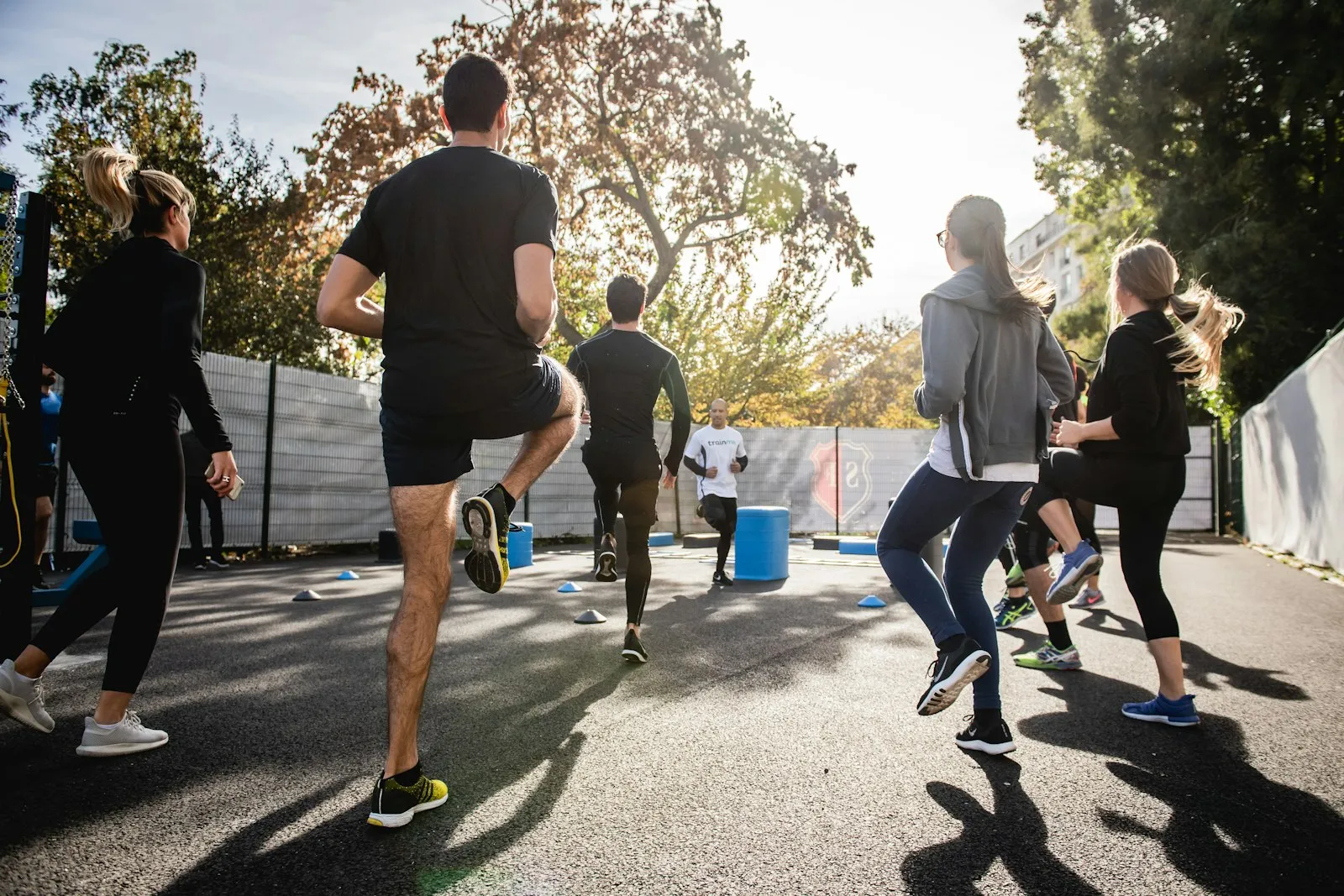
Can calisthenics help you lose weight? How to combine a calorie deficit, bodyweight strength training and daily steps to lose fat without losing muscle.
Calisthenics is a great tool for losing weight, but probably not for the reason you think. Bodyweight workouts don’t melt fat by themselves, and no circuit will out-train a diet that doesn’t add up. What calisthenics does very well is make sure that when the scale goes down, what you lose is fat, not the muscle that shapes your body.
This guide explains how to put the pieces together: diet, strength training and daily movement, in the right order.
A quick word before starting: this is general information, not medical advice. If you have a health condition (diabetes, heart or blood pressure problems, joint issues), take medication, are pregnant or breastfeeding, or have a history of eating disorders, talk to a doctor or registered dietitian before starting a diet.
Fat loss in one sentence
You lose fat when you consistently take in less energy than you spend. That’s the calorie deficit, and it’s not optional. Every method that works, from intermittent fasting to low-carb, works because it helps people eat less overall.
Training changes what you lose. Without strength training, a meaningful part of the weight lost during a diet can come from muscle. With it, your body gets a clear signal to keep its muscle, so you end up leaner and stronger instead of just smaller.
Here’s how each piece contributes:
| Piece | Main role in fat loss | Priority |
|---|---|---|
| Calorie deficit | Creates the fat loss | 1 |
| Protein intake | Protects muscle, keeps you full | 2 |
| Strength training (calisthenics) | Keeps or builds muscle | 3 |
| Daily steps and movement | Adds calories burned, easy to recover from | 4 |
| Sleep | Supports appetite control and recovery | 5 |
| Extra cardio sessions | Optional bonus | 6 |
Step 1: set a moderate deficit
A moderate deficit of around 300 to 500 kcal below maintenance is a reasonable starting point for most people. It’s enough to see progress without wrecking your energy, your mood or your training.
How fast to go
A useful target is to lose roughly 0.5 to 1% of your body weight per week, measured as a weekly average, not day to day. That’s the range a widely cited review recommends to maximize muscle retention while dieting (Helms et al., 2014). For someone at 80 kg, it means 0.4 to 0.8 kg per week.
Slower is often better than you’d think. In a trial with athletes who kept strength training, two groups lost a similar share of their body weight, one at about 0.7% per week and the other at about 1.4%. The slower group lost more of its fat and gained lean mass and strength; the faster group’s lean mass didn’t budge (Garthe et al., 2011). If you lose faster than 1% a week, your training will usually suffer and muscle becomes harder to keep. If the average doesn’t move for two to three weeks, reduce your intake slightly or add more walking.
Protein and meals
Protein is your best ally in a deficit. The ISSN suggests 1.4 to 2.0 g per kg of body weight per day for most people who train, and up to 2.3 to 3.1 g/kg for lean, trained people during a diet (Jäger et al., 2017). In practice:
- Aim for at least 1.6 g per kg of body weight per day, a bit more if you’re already lean. If you have a lot of weight to lose, base the calculation on your goal weight rather than your current weight.
- Build meals around protein and vegetables, then fill the rest with carbs and fats according to your target.
- Don’t drink your calories without noticing: juices, sodas, fancy coffees and alcohol add up fast.
For the basics of estimating maintenance, choosing protein sources and building a day of meals, see our calisthenics nutrition guide.
Step 2: train for strength, not for sweat
The most common mistake is turning every session into an exhausting high-rep circuit. It feels productive, but it’s a poor signal for keeping muscle. During a deficit, your training should look like a strength program:
- Hard sets in roughly the 5 to 15 rep range, stopping one to three reps before failure.
- Progressive overload: harder variations, more reps or slower tempos over time.
- The basic movement patterns: push, pull, squat, hinge, core.
Your strength may stall during a long diet, and that’s normal. The goal is to keep performance roughly stable. If you’re a beginner, you’ll probably still get stronger, which is one of the best parts of starting calisthenics while losing fat. A structured full-body program, such as our 12-week calisthenics program for beginners, works perfectly during a fat loss phase: you don’t need a special “fat-burning” routine. The same goes for the “army-style” programs sold in ads: military calisthenics is useful training, but it only works for fat loss alongside the deficit.
Step 3: walk more, every day
Most of the calories you burn outside meals don’t come from workouts. They come from everything else: walking, standing, taking the stairs, carrying groceries. Researchers call it non-exercise activity thermogenesis (NEAT). In a classic overfeeding study, changes in NEAT explained a tenfold difference in how much fat people stored (Levine et al., 1999). It varies a lot between people and tends to drop without you noticing when you diet.
A daily step habit is one of the most underrated fat loss tools:
- It burns calories without eating into your recovery.
- It’s easy on the joints, even for heavier beginners.
- It helps with appetite and mood for many people.
Start from your current average and add around 1,000 to 2,000 steps per day, then build up gradually. A short walk after meals, phone calls on foot and getting off one stop early are easy wins.
A sample week
Here’s a simple structure that combines everything. Adjust the days to your schedule.
| Day | Training | Daily movement |
|---|---|---|
| Monday | Full body strength A (40–45 min) | Step target |
| Tuesday | Rest or easy walk | Step target + longer walk |
| Wednesday | Full body strength B (40–45 min) | Step target |
| Thursday | Rest or mobility (15 min) | Step target |
| Friday | Full body strength A (40–45 min) | Step target |
| Saturday | Optional: hike, bike, sport you enjoy | Active day |
| Sunday | Rest | Easy walk |
Two to four strength sessions a week is enough for most beginners. Consistency over months matters far more than training every day.
Example full body session
| Exercise | Sets × reps | Easier option |
|---|---|---|
| Squat or split squat | 3 × 8–15 | Box squat to a chair |
| Push-up | 3 × 6–15 | Incline push-up on a table or wall |
| Inverted row | 3 × 6–12 | Rows under a table, knees bent |
| Glute bridge | 3 × 10–15 | Bodyweight, short range |
| Plank | 3 × 20–45 s | Plank on knees or incline plank |
Rest about 90 seconds between sets. When you hit the top of the rep range on every set, move to a harder variation.
If you want more intensity, you can finish one or two sessions with a short circuit of 8 to 10 minutes, for example the beginner EMOM from our burpees guide or a few rounds of 20 to 30 seconds of mountain climbers. Think of it as a bonus, not the core of your training.
Adapting calisthenics for heavier beginners
Bodyweight training means you lift your own weight, so a heavier person starts with more load. That’s not a problem, it just means picking the right starting point:
- Push: wall push-ups, then incline push-ups on a counter, then a table, then a lower surface. Our push-up progression breaks that path into small steps.
- Pull: rows under a sturdy table or with a towel around a door handle, before inverted rows on a bar. The setup and safety checks are in our calisthenics workout at home without a bar.
- Squat: sit-to-stand from a chair, then box squats, then free squats. Later, single-leg work such as the box pistols of our pistol squat progression keeps your legs challenged.
- Core: dead bugs and incline planks before full planks. The beginner routine of our calisthenics abs workout starts exactly there and shows how to progress.
- Avoid early on: lots of jumping, burpees and long runs if your knees or ankles complain. Walking is enough cardio to start.
Every variation gets easier as you get stronger and lighter, so progress tends to snowball. Your first full push-up or first pull-up becomes a realistic milestone.
Realistic expectations
Fat loss is rarely linear. Water, salt, carbs, stress and the menstrual cycle can move the scale up or down by a noticeable amount from one day to the next, which says nothing about your fat.
What a well-run phase usually looks like:
- Weeks 1–2: a quick drop, mostly water and food volume. Don’t take it as your real pace.
- Weeks 3–8: steadier progress, with some flat weeks. Strength often goes up for beginners.
- After a few months: progress slows as you get lighter. Small adjustments to food or steps keep things moving.
Planning a break at maintenance for a week or two after several months of dieting can make the whole process easier to sustain. For what to expect on the muscle side over the same period, read how much muscle you can build in a year, and for strength and skills, how long it takes to see calisthenics results.
Track progress beyond the scale
The scale is useful, but it’s only one signal. Combine several:
| What to track | How often | Why |
|---|---|---|
| Weekly average weight | Daily weigh-in, weekly average | Smooths out daily noise |
| Waist measurement | Every 1–2 weeks | Tracks fat loss around the midsection |
| Progress photos | Every 2–4 weeks, same light and pose | Shows changes you can’t see day to day |
| Workout performance | Every session | Confirms you’re keeping or building muscle |
| Daily steps | Daily | Keeps your activity from drifting down |
If your waist shrinks and your reps go up while the scale barely moves, you’re probably losing fat and gaining muscle at the same time. That’s a win. For what those changes add up to over 3 to 12 months, and which areas slim down first, see what you’ll look like when you lose weight.
What derails most fat loss phases
- Cutting calories too hard. It works for two weeks, then hunger, fatigue and binges take over.
- Losing too fast. Above roughly 1% of body weight per week, more of the loss tends to come from muscle.
- Only doing cardio and circuits. You lose weight, but more of it comes from muscle.
- Skipping protein. It’s the easiest lever to stay full and protect muscle.
- Judging progress day by day. Look at weekly averages and monthly trends.
- Trying to change everything at once. Start with a few habits you can actually keep.
A plan you can keep for months
The people who lose fat and keep it off rarely do it with a 30-day challenge. They follow a sustainable plan: a moderate deficit, regular strength training, a daily walking habit, and adjustments based on real data. Connecting those adjustments to your weekly check-ins, so the calorie target moves when your average weight does, is exactly the loop Titan Mode is being designed around.
This article is general information, not medical advice. If you have a medical condition, an injury, pain or are pregnant, talk to a health professional before changing your training or diet.
FAQ
Can you lose weight with calisthenics alone?
Calisthenics helps, but weight loss comes from eating fewer calories than you burn over time. Training's main job during fat loss is to keep or build muscle so that the weight you lose is mostly fat. Combine it with a moderate calorie deficit and daily walking.
Is calisthenics or cardio better for fat loss?
You don't have to choose. Strength training protects your muscle, while walking and light cardio add calories burned without draining your recovery. A few strength sessions per week plus a daily step habit is a simple, effective combination.
Can I lose belly fat with ab exercises?
Not specifically. Training a muscle doesn't burn the fat lying on top of it; your body decides where fat comes off first, and the belly is often one of the last places. Core work makes your midsection stronger, but the fat goes with an overall deficit.
I'm overweight and can't do a push-up. Can I still start?
Yes. Start with easier variations such as wall or incline push-ups, box squats and table rows, and progress from there. If you have a health condition, joint pain or haven't exercised in a long time, check with a doctor before starting.
Sources
- Helms E.R., Aragon A.A., Fitschen P.J. (2014). Evidence-based recommendations for natural bodybuilding contest preparation: nutrition and supplementation. J Int Soc Sports Nutr.
- Garthe I. et al. (2011). Effect of two different weight-loss rates on body composition and strength and power-related performance in elite athletes. Int J Sport Nutr Exerc Metab.
- Jäger R. et al. (2017). International Society of Sports Nutrition position stand: protein and exercise. J Int Soc Sports Nutr.
- Levine J.A., Eberhardt N.L., Jensen M.D. (1999). Role of nonexercise activity thermogenesis in resistance to fat gain in humans. Science.