Calisthenics Abs Workout: 13 Core Exercises and Routines
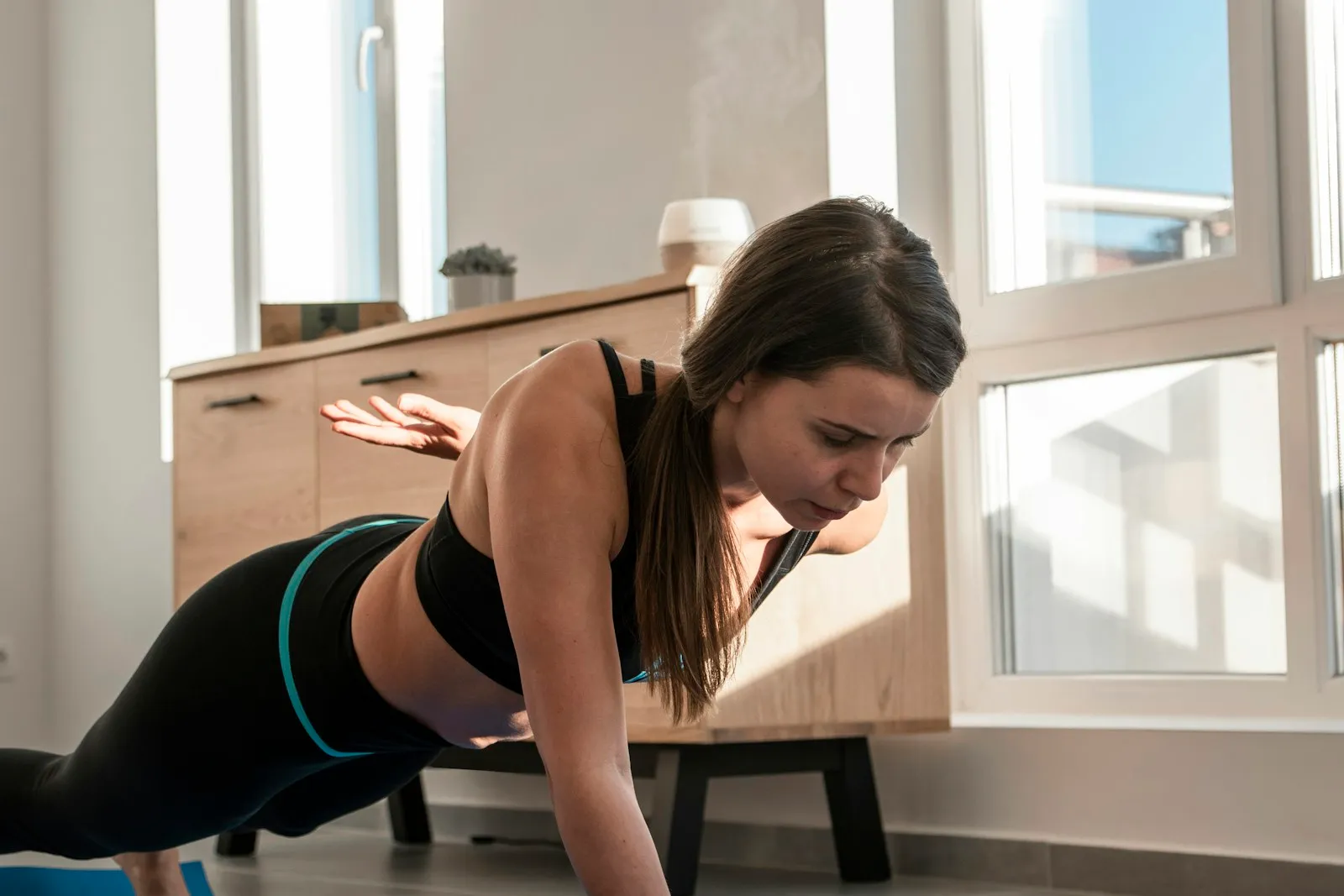
The 13 best calisthenics ab exercises by type and level, beginner to advanced routines, a 4-week abs plan, lower abs and obliques, and how to progress.
A good calisthenics abs workout does not look like 200 crunches. Calisthenics asks your core to do one main job: keep your body rigid while your arms and legs move or hold you up. That is what keeps your push-ups straight, your pull-ups from swinging and your handstand from banana-ing. So the best core routine trains your trunk to resist movement in every direction, then adds a few exercises that bring the legs up to the trunk.
The short answer: pick four exercises, one of each type: one that resists arching (plank or hollow body hold), one that resists bending to the side (side plank), one that resists twisting (bird dog or plank shoulder taps) and one that brings the legs up (lying or hanging leg raises). Do 3 sets of each, 20 to 45 seconds for holds and 8 to 15 slow reps for the rest, with 45 to 60 seconds of rest, two or three times a week at the end of your training. When the top of the range becomes easy, move to the next version of the exercise instead of adding more sets.
Below: the four jobs of the core, the 13 best bodyweight ab exercises with easier and harder versions, three complete routines by level, a 4-week plan, a 10-minute version, what works for the lower abs and obliques, how to progress and the mistakes to avoid. If you want those core sets built into your weekly plan instead of tacked on at random, Titan Mode builds your calisthenics program around your level and your equipment, with every exercise shown during the session.
The best calisthenics ab exercises at a glance
Use this table to pick your exercises. Choose one from each job at your level; the details for each follow further down.
| Exercise | Main job | Level | Equipment |
|---|---|---|---|
| Plank | Anti-extension | Beginner | None |
| Dead bug | Anti-extension | Beginner | None |
| Side plank | Anti-lateral flexion | Beginner | None |
| Bird dog | Anti-rotation | Beginner | None |
| Lying leg raises | Hip flexion | Beginner | None |
| Reverse crunch | Hip and trunk flexion | Beginner | None |
| Plank shoulder taps | Anti-rotation | Beginner to intermediate | None |
| Hollow body hold | Anti-extension | Intermediate | None |
| V-ups and tuck-ups | Hip and trunk flexion | Intermediate | None |
| Hanging knee and leg raises | Hip flexion | Intermediate to advanced | Pull-up bar |
| L-sit | Hip flexion, held | Intermediate to advanced | Floor, parallettes or dip bars |
| Windshield wipers | Rotation control | Advanced | Floor or pull-up bar |
| Dragon flag | Anti-extension | Advanced | Bench or solid anchor |
What your core actually does
Your “core” is more than the six-pack muscle. It includes the rectus abdominis at the front, the obliques on the sides, the deep transverse abdominis, the muscles along the spine, the glutes and the hip flexors. Together, they do four jobs:
| Job | What it means | Typical exercises |
|---|---|---|
| Anti-extension | Stop the lower back from arching | Plank, hollow body hold, body saw, dragon flag |
| Anti-lateral flexion | Stop the trunk from bending sideways | Side plank, side plank with leg lift |
| Anti-rotation | Stop the trunk from twisting | Bird dog, plank shoulder taps, plank reaches |
| Hip flexion with a braced trunk | Bring the legs to the trunk under control | Lying leg raises, hanging knee and leg raises, L-sit |
Core training research and position stands favour exercises that keep the spine steady against a load over endless spine bending (McGill, 2010; Behm et al., 2010). That is a good fit for calisthenics, where a stiff trunk is what lets the rest of your body produce force.
The best calisthenics core exercises
For each exercise: how to do it, and how to make it easier or harder. The goal is always the same: the body line stays fixed while you breathe.
1. Plank (anti-extension)
Forearms under the shoulders, body straight from head to heels, glutes squeezed, ribs pulled down. Push the floor away so your upper back is slightly rounded rather than sagging between the shoulder blades. For hold times by level and every variation from the incline plank to the RKC plank, see our full guide to the plank exercise.
- Easier: knees on the floor, or hands on a bench.
- Harder: straight-arm plank with the hands further forward, one leg lifted, then the body saw (rock the body forward and back on the forearms a few centimetres). Slow mountain climbers, one knee to the chest at a time without moving the hips, are another way to make the plank harder.
2. Hollow body hold (anti-extension)
Lying on your back, lower back pressed into the floor, shoulders and legs lifted, arms overhead. It is the shape behind most calisthenics skills. Our full hollow body hold guide gives the six levels, from the dead bug to the hollow rock.
3. Side plank (anti-lateral flexion)
On one forearm, elbow under the shoulder, feet stacked, hips lifted so the body forms a straight line. EMG work has shown the side plank to be one of the most effective exercises for the obliques among common core exercises (Ekstrom et al., 2007).
- Easier: bottom knee on the floor.
- Harder: top leg lifted, straight-arm side plank, or slow hip dips.
4. Bird dog (anti-rotation)
On hands and knees, extend one arm and the opposite leg until they are in line with your body, hold for two seconds without the hips tilting, then switch. It looks easy; done slowly with a perfectly still pelvis, it is not.
5. Plank shoulder taps (anti-rotation)
In a straight-arm plank, feet a little apart, touch one shoulder with the opposite hand, then switch. The hips must not rock from side to side. Bring the feet closer together to make it harder.
6. Lying leg raises (hip flexion)
On your back, hands by your sides or under the hips, lower back pinned to the floor. Raise straight legs to vertical and lower them slowly, stopping before your lower back lifts. Bend the knees to make it easier.
7. Reverse crunch (hip flexion and trunk flexion)
From the same position, knees bent, roll the hips off the floor toward your chest and lower them slowly. It teaches you to curl the pelvis, which you need for hanging leg raises and the top of the dragon flag.
8. Hanging knee raises and leg raises (hip flexion)
Hang from a bar with your shoulders engaged, not shrugged up to your ears. Bring the knees up to hip height or higher, without swinging, then lower in two or three seconds. Progress to straight legs, then to toes-to-bar: our hanging leg raise guide details each level and the form cues that stop the swing. These are among the most useful core exercises for calisthenics because they combine the core, the grip and the shoulders, exactly as the bar skills do.
9. L-sit (hip flexion, held)
Supported on your hands (floor, parallettes or dip bars), legs straight in front of you, parallel to the floor. Start with one leg bent. Our L-sit progression guide covers it step by step, from the foot-supported L-sit to the full hold.
10. Dragon flag (advanced anti-extension)
Lying on a bench and holding on behind your head, you lower your whole body as one straight line. It is the top of the anti-extension ladder; see our dragon flag guide for a safe progression.
11. Dead bug (anti-extension, beginner)
On your back, arms pointing at the ceiling, hips and knees bent at 90 degrees. Press your lower back into the floor, then slowly extend one arm overhead and the opposite leg toward the floor, return and switch. The moment the lower back lifts, shorten the range. It is the best first step toward the hollow body hold, and a useful warm-up before harder core work.
- Easier: move only the legs, heels tapping the floor with bent knees.
- Harder: straighter legs, slower tempo, or both legs and arms at once (which is very close to a hollow body hold).
12. V-ups and tuck-ups (hip and trunk flexion)
From a hollow body position, lift your chest and legs at the same time until your hands reach toward your shins or feet, then lower back to the hollow shape under control. It adds a strong hip flexion and trunk curl to the hollow shape, which is why it shows up in most intermediate core routines.
- Easier: tuck-ups (knees bend toward the chest as the chest lifts), or single-leg V-ups (one leg at a time).
- Harder: a slow two-second lowering, a pause at the top, or alternating twisted V-ups, reaching toward the outside of each foot for more oblique work.
- Watch for: the lower back slamming into the floor on the way down. If you can’t land back in a hollow position, go back to tuck-ups.
13. Windshield wipers (rotation control, advanced)
Lying on your back, arms out to the sides, legs vertical. Lower both legs to one side as far as you can control, without the opposite shoulder lifting, then bring them back through the middle to the other side. The hanging version, from a toes-to-bar position, is one of the hardest bar core exercises.
- Easier: knees bent at 90 degrees, small range.
- Harder: straight legs, bigger range, then the hanging version once your hanging leg raises are solid.
Calisthenics abs workouts by level
Do these at the end of a normal session, or as a short standalone session on a rest day. Rest 45 to 60 seconds between sets.
Beginner routine (floor, no equipment)
| Exercise | Sets × reps or time |
|---|---|
| Plank (knees down if needed) | 3 × 20–30 s |
| Side plank, each side | 2 × 15–20 s |
| Bird dog, each side | 2 × 6 slow reps (2-second hold) |
| Lying leg raises, knees bent | 3 × 8–10 |
| Dead bug or tuck hollow hold | 2 × 20 s |
Move on when you can hold a 45-second plank, a 30-second side plank and do 12 clean bent-knee leg raises.
Intermediate routine (floor and pull-up bar)
| Exercise | Sets × reps or time |
|---|---|
| Hanging knee raises | 3 × 8–12 |
| Hollow body hold | 3 × 20–30 s |
| Side plank with top leg lifted, each side | 3 × 20 s |
| Plank shoulder taps | 3 × 16 taps |
| Lying straight-leg raises | 3 × 8–10 |
No bar yet? Replace the hanging knee raises with reverse crunches. Our home workout without equipment shows how to train the rest of the body the same way.
Advanced routine (bar, bench or parallettes)
| Exercise | Sets × reps or time |
|---|---|
| Hanging leg raises or toes-to-bar | 4 × 6–10 |
| L-sit (or tuck L-sit) | 4 × 10–20 s |
| Dragon flag negatives | 3 × 3–5 (5-second lowering) |
| Body saw | 3 × 8–10 |
| Straight-arm side plank with hip dips, each side | 2 × 10 |
10-minute calisthenics core workout
Two rounds, 40 seconds of work and 20 seconds of rest per exercise, no break between rounds:
- Plank
- Side plank, right
- Side plank, left
- Reverse crunches
- Plank shoulder taps
Pick the version of each exercise that you can hold with good form for the full 40 seconds. It is a useful finisher on a busy day, but the structured routines above build strength faster because the rest is long enough to keep the quality high.
A 4-week calisthenics abs plan
Use this as a short block at the end of two or three sessions a week. Each week makes one variable harder, which keeps you progressing without adding endless volume. Rest 45 to 60 seconds between sets.
| Week | Anti-extension | Side | Rotation | Legs to trunk |
|---|---|---|---|---|
| 1 | Dead bug, 3 × 8 per side | Side plank, 2 × 20 s | Bird dog, 2 × 6 per side | Lying bent-knee leg raises, 3 × 10 |
| 2 | Plank, 3 × 30 s | Side plank, 3 × 25 s | Plank shoulder taps, 3 × 12 | Reverse crunches, 3 × 10 |
| 3 | Tuck hollow hold, 3 × 20 s | Side plank with top leg lifted, 3 × 15 s | Plank shoulder taps, feet closer, 3 × 16 | Tuck-ups, 3 × 8 or hanging knee raises, 3 × 8 |
| 4 | Hollow body hold, 3 × 20–30 s | Straight-arm side plank, 3 × 20 s | Slow Russian twist, 3 × 8 per side | Single-leg V-ups, 3 × 6 per side or hanging knee raises, 3 × 12 |
If a week feels too hard, repeat it. If week 4 feels easy, move straight to the intermediate routine above. Bodyweight squats, push-ups and rows done with a braced trunk count as extra core work, so you don’t need more than this on top of a full-body program.
How often, how many sets, how to progress
- Frequency: two or three dedicated core blocks a week is enough for most people. Your core already works hard in push-ups, rows, pull-ups, dips and squats.
- Volume: 8 to 12 hard sets per week across all core exercises is a sensible range. More is not better if the form slips.
- Intensity: finish each set with one or two good reps (or a few seconds) left. Stop as soon as the lower back arches or the hips sag.
- Progression: once you reach the top of the range (for example 3 × 45 seconds or 3 × 15 reps), switch to a harder version rather than holding longer. Increasing the difficulty once a load becomes manageable is the basic principle of resistance training progression (ACSM, 2009).
- Track it: write down the version, the sets and the seconds or reps you actually did. It is the only way to know when to move up.
Keeping those numbers honest across weeks is where most people lose the thread. Titan Mode logs each set and lets you swap an exercise for an easier or harder version when you need to, so your core work moves forward with the rest of your training.
Lower abs and obliques: can you target them?
The rectus abdominis, the “six-pack” muscle, is a single muscle that runs from the ribs to the pubis. Every ab exercise works all of it. There is some evidence of a different emphasis between its upper and lower parts: in one EMG study, curl-ups activated the upper portion more, and a well-performed posterior pelvic tilt worked the lower portion harder, but only in trained people who did the movement correctly (Sarti et al., 1996).
- For the “lower abs”: choose exercises that curl the pelvis toward the ribs, such as reverse crunches, lying leg raises, hanging knee raises and V-ups. The key is the pelvic curl at the top, not just lifting the legs, which the hip flexors can do alone.
- For the obliques: side planks, hanging oblique knee raises (knees toward one elbow), slow Russian twists and windshield wipers. Anti-rotation exercises such as shoulder taps and bird dogs also train them.
- For a flat lower belly: that area is usually where fat is lost last. Exercise choice won’t change that; overall body fat will.
Crunches, sit-ups or planks?
All three can have a place. Crunches and sit-ups train the abs to bend the spine, which they also do in daily life, and they are fine for most healthy people in moderate amounts. Planks and hollow holds train the abs to keep the trunk rigid under load, which is the job they do in push-ups, handstands and levers. For calisthenics, start with the rigid-trunk exercises and add a curling exercise (reverse crunch, tuck-up, V-up) rather than piling up sit-ups. If bending the spine repeatedly bothers your back, leave crunches out without worrying: you are not missing anything essential.
Common mistakes
- Sagging or piking in the plank: the hips drop or rise. Squeeze your glutes and pull your ribs down; if you can’t hold the line, use the knees-down version.
- Lower back lifting during leg raises: the hip flexors take over and the back arches. Bend the knees, reduce the range or press your hands under your hips.
- Swinging on the bar: momentum does the work in hanging raises. Pause at the bottom, keep the shoulders engaged and lower slowly.
- Holding your breath: you need to breathe while staying braced, the same skill you need upside down or on the bar.
- Only doing crunches: they train one job out of four. Cover anti-extension, side bending, rotation and leg raises. For active rotation, a slow Russian twist with a straight back does the job; skip the fast, rounded version.
- Chasing time over quality: a two-minute plank with a sagging back trains the wrong pattern. Make it harder instead.
Will this give you visible abs?
A core routine will make your abdominal muscles stronger and a little thicker. Whether you can see them is mainly a question of body fat. A controlled trial found that six weeks of abdominal exercise alone did not reduce abdominal fat compared with diet alone (Vispute et al., 2011). Training a muscle doesn’t burn the fat sitting on top of it. If visible abs are the goal, combine full-body strength training with a moderate calorie deficit, enough protein and daily walking; our guide to calisthenics for weight loss explains how.
Fitting core work into a calisthenics program
The simplest approach: two or three core exercises at the end of each full-body session, rotating the four jobs across the week. Our 12-week beginner program keeps it to one core exercise per session (planks in session A, dead bugs then hollow holds in session B); once you outgrow that, swap in one of the routines above as a short end-of-session block. If you train skills such as the L-sit, front lever or handstand, those already count as core work: reduce the dedicated core block on those days rather than piling it on.
Different exercises load the abdominal wall and hip flexors differently (Escamilla et al., 2006), which is another reason to rotate a few exercises rather than doing the same one forever.
Safety and limits
- Lower back pain during an exercise: usually the version is too hard and the back is taking over. Regress. Ongoing back pain, or pain that spreads into a leg, should be assessed before you load your core hard.
- Pregnancy and after giving birth: heavy anti-extension work (long planks, hollow holds, leg raises) is not the place to start. Ask your midwife, doctor or a physiotherapist trained in postnatal care, especially if you notice a ridge or doming along the midline of your belly.
- Hernia or recent abdominal surgery: get medical clearance first.
- Neck strain: in hollow holds and leg raises, keep the head down until the abs can lift the shoulders without the neck pulling.
Strong core, better everything
A calisthenics core workout doesn’t need to be long. Four well-chosen exercises, done with a clean body line two or three times a week, and moved to a harder version when the numbers say so, will show up in everything else: straighter push-ups, steadier pull-ups and skills that finally hold together. If you’d rather have that core work placed in a complete weekly plan, download Titan Mode and set up your calisthenics program.
This article is general information, not medical advice. If you have a medical condition, an injury, pain or are pregnant, talk to a health professional before changing your training or diet.
FAQ
How often should I do a calisthenics abs workout?
Two to four times a week is enough for most people. Your abs already work during push-ups, pull-ups, dips and squats, so a short dedicated block of 10 to 15 minutes at the end of two or three sessions usually does the job. Daily ab work is possible if it stays light, but it is rarely needed to progress.
Can calisthenics give you a six-pack?
Calisthenics will make your abs strong and a little thicker, but visible abs depend mainly on your body fat level, which is set by your diet and overall activity. Ab exercises alone do not burn the fat on your belly. Combine strength training with a modest calorie deficit if visible abs are your goal.
How long should I hold a plank?
There is no official standard. A clean 30 to 60 seconds is a good practical target. Past about 60 seconds, holding longer mainly trains endurance; make the plank harder instead (longer lever, one arm or one leg lifted, body saw) so it keeps building strength.
What is the best calisthenics exercise for abs?
No single exercise covers everything. A good routine includes one exercise that resists arching (plank, hollow body hold), one that resists side bending (side plank), one that resists rotation (bird dog, shoulder taps) and one that brings the legs to the trunk (leg raises). For most people, hanging leg raises and the hollow body hold give the most carry-over to calisthenics skills.
Are sit-ups and crunches bad?
They are not dangerous for most healthy people in reasonable amounts, but they are not the most useful core exercises for calisthenics. The skills you are working toward need a trunk that stays rigid under load, which is what planks, hollow holds and leg raises train. If repeated spine bending bothers your back, leave crunches out.
Can you target the lower abs with calisthenics?
Only partly. The rectus abdominis is one muscle, so every ab exercise works all of it. Exercises that curl the pelvis toward the ribs, such as reverse crunches, lying and hanging leg raises, put a bit more emphasis on the lower part when done with a controlled posterior pelvic tilt. Whether that lower area looks flat depends mostly on body fat, not on the exercise.
Can I do calisthenics abs every day?
You can do a short, easy core block daily, but hard ab work every day is rarely useful. Two or three challenging sessions a week, plus the core work already built into push-ups, pull-ups and squats, gives your trunk time to recover and keeps quality high.
Are V-ups a good calisthenics ab exercise?
Yes, once you can hold a hollow body for 30 seconds. V-ups combine the hollow shape with hip flexion, so they are a solid intermediate exercise. Start with tuck-ups or single-leg V-ups, keep the lower back from slamming into the floor and stop the set when the legs drop uncontrolled.
Do I need equipment for a calisthenics core workout?
No. A floor and a mat cover a complete beginner and intermediate routine. A pull-up bar adds hanging knee and leg raises, which are among the best core exercises for calisthenics, and a bench or a solid anchor lets you train the dragon flag later on.
Sources
- Sarti M.A. et al. (1996). Muscle activity in upper and lower rectus abdominus during abdominal exercises. Arch Phys Med Rehabil, 77(12), 1293–1297.
- McGill S.M. (2010). Core training: evidence translating to better performance and injury prevention. Strength Cond J.
- Behm D.G. et al. (2010). Canadian Society for Exercise Physiology position stand: the use of instability to train the core in athletic and nonathletic conditioning. Appl Physiol Nutr Metab.
- Escamilla R.F. et al. (2006). Electromyographic analysis of traditional and nontraditional abdominal exercises: implications for rehabilitation and training. Phys Ther.
- Ekstrom R.A., Donatelli R.A., Carp K.C. (2007). Electromyographic analysis of core trunk, hip, and thigh muscles during 9 rehabilitation exercises. J Orthop Sports Phys Ther.
- Vispute S.S. et al. (2011). The effect of abdominal exercise on abdominal fat. J Strength Cond Res.
- American College of Sports Medicine (2009). Position stand: progression models in resistance training for healthy adults. Med Sci Sports Exerc.