Calf Raises: How to Do Them, Muscles Worked, Variations
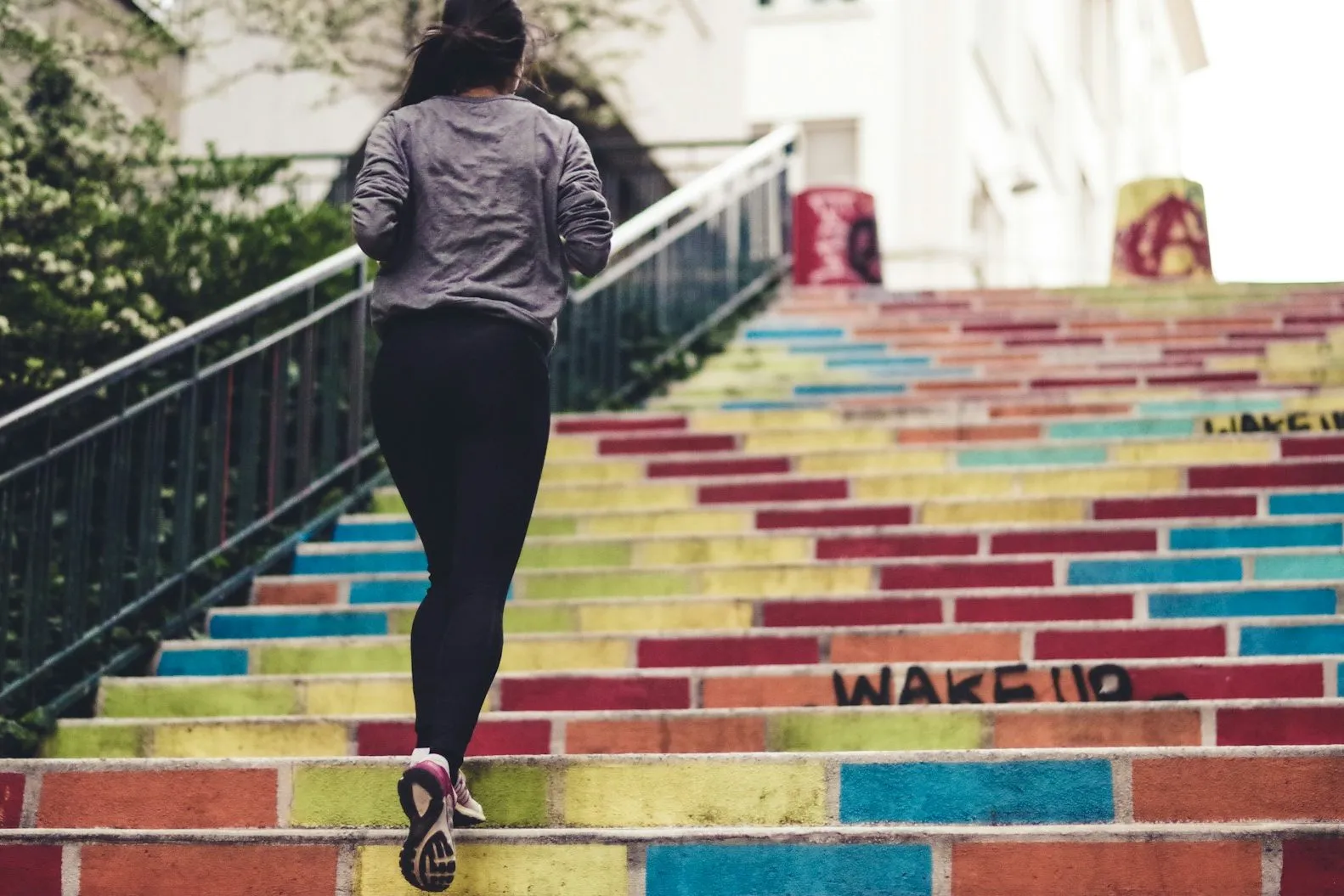
How to do calf raises with proper form, the muscles worked, 12 bodyweight variations up to single-leg, how many reps, a 6-week plan and mistakes to avoid.
The calf raise is the simplest way to train the muscles at the back of your lower leg: you rise onto the balls of your feet, then lower your heels again. It needs nothing more than a step or a stair, and the calves it builds do real work every time you walk, run, jump, climb stairs or land from a jump.
The short answer: stand on the edge of a step with the balls of your feet on it and your heels hanging off. Lower your heels slowly until you feel a stretch in your calves, pause for a second, then rise as high as you can onto your big toe and second toe, pause again at the top and repeat. Keep your knees straight but not locked and don’t bounce. Start with 2 to 3 sets of 15 to 20 reps on both legs, two or three times a week. When 3 sets of 25 feel easy, switch to single-leg calf raises: that’s where bodyweight calf training really starts to work.
Below: step-by-step form, the muscles worked, why calves matter more than they look, 12 variations from easiest to hardest, how many reps, a 6-week plan and the mistakes that keep calves from growing. If you want your calf work placed in a full leg routine that tells you when to move to the next variation, Titan Mode builds your calisthenics program from your level, your schedule and the equipment you have.
How to do a calf raise, step by step
- Find a step. A stair, a sturdy box or a thick book works. Stand with the balls of your feet on the edge and your heels off it. Hold a wall, a rail or a door frame lightly for balance: it shouldn’t help you lift, only keep you steady.
- Set your feet. Hip-width apart, toes pointing forward or very slightly out. Weight over the ball of the foot, roughly under the big toe and second toe.
- Lower slowly. Let your heels drop below the step for two to three seconds, until you feel a strong but comfortable stretch in your calves. Pause for one second at the bottom: no bouncing.
- Rise. Push through the balls of your feet and lift your heels as high as you can, keeping your ankles straight rather than rolling out onto your little toes.
- Squeeze at the top. Hold the highest position for a second, then start the next slow descent.
- Breathe normally: out on the way up, in on the way down.
Keep your knees straight but soft for the standard version. Your hips and torso shouldn’t move: if you feel yourself bending at the hips or bobbing your knees to get up, the variation is too hard for now.
No step? Do them on the floor. You lose the stretch at the bottom, which matters for muscle growth (more on that below), so move to a step as soon as you can.
Muscles worked
| Muscle | Where it is | Role in the calf raise |
|---|---|---|
| Gastrocnemius | The visible, two-headed “diamond” of the calf | Lifts the heel; crosses the knee, so it works hardest with a straight knee |
| Soleus | Flat muscle underneath, wider than the gastrocnemius | Lifts the heel in every version; does more of the work when the knee is bent |
| Tibialis posterior, peroneals | Deep and outer lower leg | Stabilise the ankle and stop it rolling in or out |
| Foot muscles | Sole of the foot | Keep the arch stable as you push through the toes |
The gastrocnemius and soleus together are called the triceps surae, and they share one tendon: the Achilles tendon, the thickest tendon in the body. That’s why calf raises are also a staple of Achilles rehabilitation.
Straight knee or bent knee? The gastrocnemius attaches above the knee, so bending the knee shortens it and takes it partly out of the movement. Straight-knee raises train both muscles; bent-knee raises (or seated raises) shift the emphasis to the soleus. A complete calf routine uses both.
Why train your calves?
Calves are easy to ignore because most leg exercises seem to cover them. They don’t, really: in a squat or a lunge your heels stay down, and the calves only stabilise.
- Running, jumping and landing. Your calves and Achilles tendon act like springs: they absorb force when your foot hits the ground and give some of it back on push-off. Strong calves make landings from burpees, jumps and sprints softer and more controlled.
- Ankle stability. Strong calves and the small muscles around the ankle help you control your ankle on uneven ground.
- Tendon health. Progressive calf loading is one of the main tools physiotherapists use for Achilles tendon problems. In a classic study, Alfredson and colleagues (1998) put 15 recreational athletes with long-standing Achilles pain on 12 weeks of slow, heavy heel-lowering exercises; all of them returned to running. That was a small study without a control group, and treatment should be guided by a professional, but it shows how well the tendon responds to load.
- Ageing well. In a randomised trial, men in their seventies did just 3 sets of 10 bodyweight calf raises, three times a week at home, for 8 weeks (Ema et al., 2017). Their ability to produce force quickly at the ankle improved by about 21% more than in the control group, and their maximal strength showed a smaller gain. The balance results were mixed and small, so calf raises alone aren’t a fall-prevention programme, but they’re an easy, safe start.
Test your calves: the single-leg heel-rise test
Physiotherapists use this simple test to assess calf endurance. Stand on one leg on a flat floor, fingertips touching a wall for balance, and rise as high as you can, as many times as you can, at about one rep every two seconds. Stop when you can’t rise fully any more. In a study of 566 healthy adults aged 20 to 81 (Hébert-Losier et al., 2017), the median was 24 reps for men and 21 for women, on a slight incline. Around 25 reps is a common rough benchmark for adults. Just as useful: compare both legs. A big difference between left and right is a good reason to train the weaker side first, and to get it checked if it follows an injury.
Calf raise variations, from easiest to hardest
Pick the first variation where 3 sets of 15 clean reps feel hard. When 3 sets of 20 to 25 feel easy, move down the list.
| Level | Variation | How to do it |
|---|---|---|
| 1 | Seated calf raise | Sit on a chair, feet flat, and lift your heels. Add a heavy bag on your knees to make it harder. Trains mostly the soleus |
| 2 | Two-leg raise, flat floor | Standing, hands on a wall. Short range but easy to learn |
| 3 | Two-leg raise on a step | Heels below the step at the bottom: full range |
| 4 | Bent-knee raise on a step | Knees bent about 20–30 degrees and kept there: soleus focus |
| 5 | Two-leg raise with slow lowering | Up in one second, down in four |
| 6 | Staggered raise | One foot slightly behind the other, most of your weight on the front foot |
| 7 | Single-leg raise, flat floor | One foot up behind you; same form |
| 8 | Single-leg raise on a step | The key bodyweight exercise: full range, pause at the bottom |
| 9 | Single-leg bent-knee raise | Same, with the knee slightly bent throughout |
| 10 | Single-leg raise with pauses | 2 seconds in the stretch and 2 seconds at the top on each rep |
| 11 | Single-leg raise with a backpack | Load a backpack with books or water bottles |
| 12 | Pogo hops | Small, quick bounces on straight legs, staying on the balls of your feet. Trains stiffness and spring, not size |
Don’t forget the front of the shin. Tibialis raises (stand with your back against a wall, heels a foot in front of you, and lift your toes toward your shins) train the muscle that does the opposite job. They’re a useful addition if you run a lot or get sore shins.
How many reps and sets?
Calves don’t need special rules. The same principles apply as for any muscle (ACSM, 2009):
- Make the sets hard. Muscle grows with light or heavy loads as long as the sets end close to failure (Schoenfeld et al., 2017). With bodyweight, that means sets of about 8 to 30 reps, stopping when you can’t complete another full-range rep.
- Use the stretch. Kassiano and colleagues (2023) compared three ways of doing calf raises for 8 weeks. The group that trained only the bottom, heels-low half of the range gained more gastrocnemius size (about 15%) than the full-range group (about 7%) and the top-half group (about 3%). Take-home: never skip the bottom, and pause there. If you want to finish a set with a few extra partial reps, do them in the stretched position, not at the top.
- Volume: for most people, 6 to 10 hard sets a week, spread over two or three sessions, is a good target. Beginners grow with less.
- Rest: 45 to 90 seconds between sets is enough. Calves recover quickly between sessions too.
What about 100 calf raises a day?
Easy two-leg raises done all day mostly train endurance. They won’t hurt a healthy person, and they’re a good way to break up long periods of sitting, but if your goal is stronger or bigger calves, three short sessions of hard single-leg sets will do more than 100 easy reps daily.
A 6-week bodyweight calf plan
Do this two or three times a week, after your leg or full-body workout or on its own. Rest 60 seconds between sets.
| Week | Exercise 1 (straight knee) | Exercise 2 (bent knee) |
|---|---|---|
| 1 | Two-leg raise on a step: 3 × 15, 1-second pause at the bottom | Seated or bent-knee raise: 2 × 20 |
| 2 | Two-leg raise on a step: 3 × 20 | Bent-knee raise on a step: 2 × 20 |
| 3 | Two-leg raise, 4-second lowering: 3 × 15 | Bent-knee raise on a step: 3 × 15 |
| 4 | Single-leg raise on a step (hold a wall): 3 × as many as possible per leg | Bent-knee raise on a step: 3 × 20 |
| 5 | Single-leg raise on a step: 3 × 12–20 per leg, 1-second pause at the bottom | Single-leg bent-knee raise: 2 × 12–15 per leg |
| 6 | Single-leg raise with 2-second pauses, or with a backpack: 3–4 × 10–15 per leg | Single-leg bent-knee raise: 3 × 12–15 per leg |
Always start with your weaker leg and do the same number of reps on the stronger one. Retest the single-leg heel-rise test at the end of week 6.
Calves are only one piece of the puzzle. Pair them with squats, lunges and a hinge in a complete calisthenics leg workout, and if your squats still need work, start with our bodyweight squat guide. Keeping track of reps per leg is where most people lose the thread: Titan Mode logs every set and every session, so you can see your single-leg reps go up from week to week.
Common mistakes
- Bouncing at the bottom. The Achilles tendon stores and releases energy like a spring, so bouncing lets it do the work instead of your muscles. Pause in the stretch for a full second.
- Only training the top half. Quick, short reps near the top feel like a burn but give the least growth. Take the heels all the way down.
- Rolling onto the little toes. Push through the big toe and second toe and keep the ankle in line with the leg.
- Bending the knees to cheat. In the straight-knee version, a knee bob turns the rep into a mini squat. Keep the knee angle fixed.
- Staying on two legs forever. For most adults, two-leg bodyweight raises are a warm-up within a few weeks. Single-leg work is where progress continues.
- Pushing through tendon pain. Mild muscle soreness is normal; sharp pain in the Achilles tendon or the heel isn’t.
Safety and limits
- Hold on to something. A wall or rail turns a balance exercise into a strength exercise and prevents falls off the step.
- Use a stable step, not a wobbly box or a slippery edge, and train in shoes with grip or barefoot on a non-slip surface.
- Achilles or heel pain: if you have pain in the tendon, a recent sprain or a history of Achilles rupture, ask a physiotherapist which version and range suit you. Rehab programmes often start without dropping the heels below the step.
- Cramps: calves cramp easily, especially when you’re new to the exercise. Stretch gently and stop the set if a cramp starts.
- Calf pain with swelling, warmth or redness that doesn’t come from training, especially after a long trip or surgery, needs a doctor rather than exercise.
Calf raises in your calisthenics routine
Calf raises are a small exercise with a big return for the time they take: five minutes, two or three times a week, is enough to make a difference. Add them after squats and lunges, or as part of a home workout with no equipment. As your legs get stronger, the next step is single-leg strength everywhere: the pistol squat progression asks a lot from your calves and ankles too.
The short version
Do calf raises on a step, take your heels low and pause in the stretch, rise high and pause at the top. Start with two legs, move to single-leg raises as soon as 3 sets of 25 feel easy, and train both straight-knee and bent-knee versions two or three times a week. Test your single-leg heel raises every six weeks: it’s an easy way to see your calves getting stronger.
This article is general information, not medical advice. If you have a medical condition, an injury, pain or are pregnant, talk to a health professional before changing your training or diet.
FAQ
What muscles do calf raises work?
Calf raises work the triceps surae: the gastrocnemius, the visible two-headed muscle at the back of the lower leg, and the soleus, a flatter muscle underneath it. Straight-knee raises load both, with the gastrocnemius doing a large share; bent-knee raises shift the work toward the soleus. Smaller muscles of the foot and ankle, such as the tibialis posterior and the peroneals, help keep the ankle stable.
How many calf raises should I do?
Start with 2 to 3 sets of 15 to 20 two-leg calf raises on a step, two or three times a week, taking the heels low and pausing at the bottom. Once 3 sets of 25 feel easy, move to single-leg calf raises and work in the 8 to 20 range per leg, ending each set close to failure. Adding more and more easy reps mostly trains endurance.
Do calf raises make your calves bigger?
They can, if the sets are hard and you keep making them harder. Two-leg bodyweight raises quickly become too easy, so progress to single-leg raises on a step, slow lowering, pauses and extra load such as a backpack. A 2023 trial found that training the stretched, heels-low part of the range produced more gastrocnemius growth than training near the top. Calf size is also strongly influenced by genetics, so results vary a lot between people.
Can I do calf raises every day?
Most healthy people can, because calves recover quickly and the load is light, but daily sets rarely beat three hard sessions a week. If you train every day, keep most days easy and only push close to failure two or three times a week. Pain in the Achilles tendon that gets worse from day to day is a sign to cut back.
Are seated or standing calf raises better?
Do both if you can. Standing, straight-knee calf raises train the gastrocnemius and the soleus together; seated or bent-knee raises put the gastrocnemius in a slack position, so the soleus does more of the work. Without equipment, a bent-knee raise on a step or a seated raise with a heavy backpack on your thighs covers the soleus.
Do calf raises help you jump higher?
They help a little: the calves and Achilles tendon contribute to the push-off in jumping and sprinting. But jumping higher depends mostly on your hips and thighs, and on practising jumps. Combine calf raises with squats, lunges and low jumps such as pogo hops for the best transfer.
Why aren't my calves growing?
Usually because the sets are too easy (two legs, no load, fast reps), the range is too short (bouncing at the top), or there aren't enough hard sets per week. Switch to single-leg raises on a step, lower for two to three seconds, pause in the stretch and stop each set only when you can't do another full rep. Genetics also play a large role in calf size.
Sources
- Ema R., Ohki S., Takayama H., Kobayashi Y., Akagi R. (2017). Effect of calf-raise training on rapid force production and balance ability in elderly men. J Appl Physiol, 123(2), 424–433.
- Hébert-Losier K., Wessman C., Alricsson M., Svantesson U. (2017). Updated reliability and normative values for the standing heel-rise test in healthy adults. Physiotherapy, 103(4), 446–452.
- Kassiano W. et al. (2023). Greater gastrocnemius muscle hypertrophy after partial range of motion training performed at long muscle lengths. J Strength Cond Res, 37(9), 1746–1753.
- Alfredson H., Pietilä T., Jonsson P., Lorentzon R. (1998). Heavy-load eccentric calf muscle training for the treatment of chronic Achilles tendinosis. Am J Sports Med, 26(3), 360–366.
- Schoenfeld B.J. et al. (2017). Strength and hypertrophy adaptations between low- vs. high-load resistance training: a systematic review and meta-analysis. J Strength Cond Res, 31(12), 3508–3523.
- American College of Sports Medicine (2009). Position stand: progression models in resistance training for healthy adults. Med Sci Sports Exerc.