Calisthenics Leg Workout: Exercises, Routine, Progression
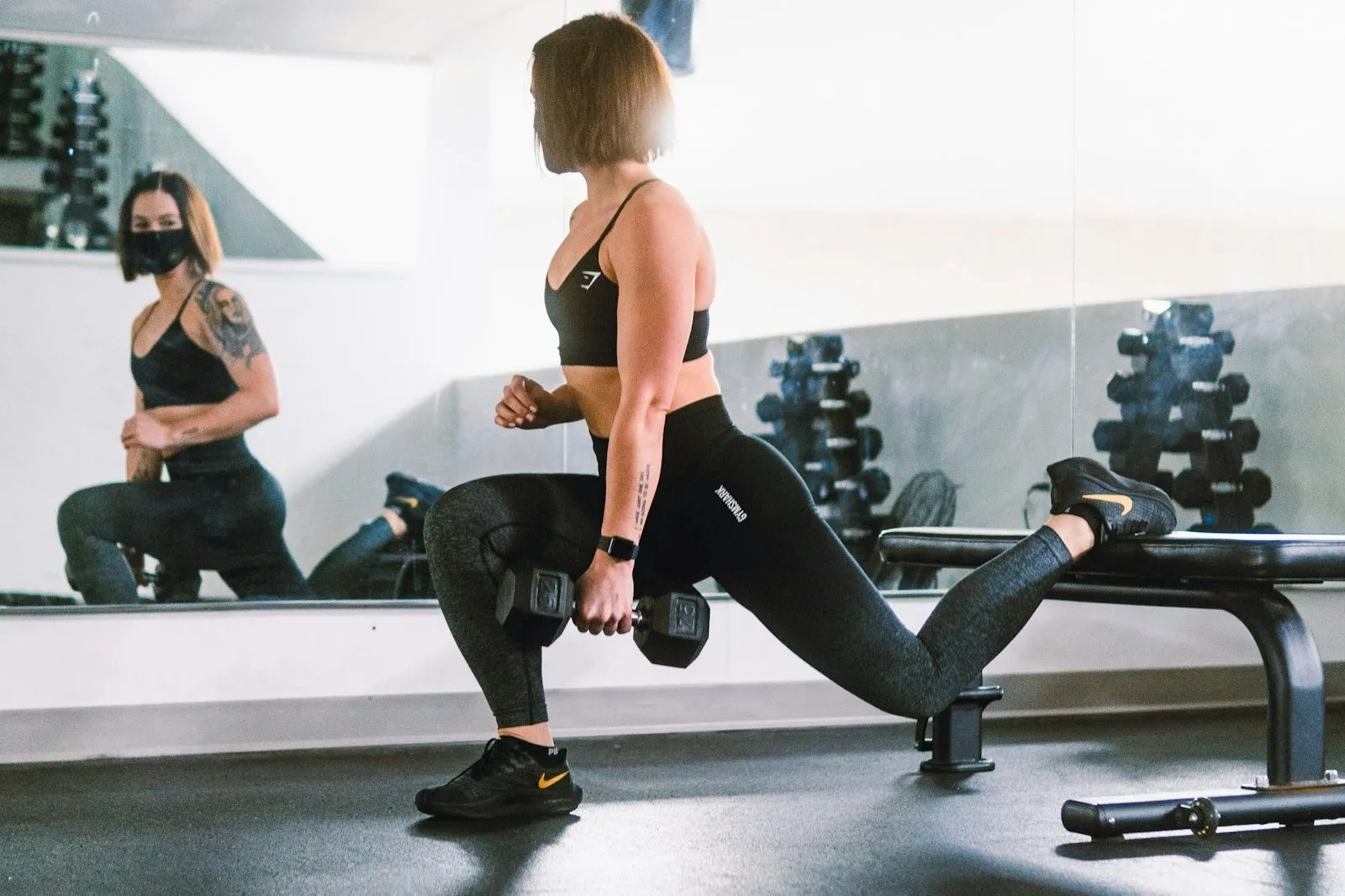
A complete calisthenics leg workout: the best bodyweight leg exercises for quads, glutes, hamstrings and calves, routines by level and how to keep progressing.
Most bodyweight programs are built around the pull-up bar and the floor, and the legs get a few sets of squats at the end. That’s why “calisthenics skips leg day” is such a common joke. It doesn’t have to be true: your legs can be trained hard with no weights at all, as long as you stop relying on two-legged squats.
The short answer: a good calisthenics leg workout covers five patterns: a squat (squats, then shrimp or pistol squats), a single-leg exercise (split squats, Bulgarian split squats, step-ups), a hip hinge (single-leg Romanian deadlifts, glute bridges), a hamstring curl (sliding leg curls, Nordic curls) and calves (single-leg calf raises). Do 3 sets of each, two sessions a week, with the last reps of every set feeling hard. When an exercise passes about 20 clean reps, move to the harder variation. That’s how you keep building strength and muscle without a barbell.
The rest of this guide gives you the exercises for each pattern, from easiest to hardest, three complete routines and the rules that make bodyweight leg training actually work. If you’d rather not plan it yourself, Titan Mode builds your weekly sessions, legs included, around your level and the equipment you have, even if that’s just the floor.
Can calisthenics really build your legs?
Yes, with one condition: the effort has to be high. Your legs are used to carrying your whole body all day, so a set of 15 easy squats doesn’t ask them for much. The question isn’t whether the load is light, it’s whether the set is hard.
A meta-analysis comparing light and heavy loads found that muscle growth was similar across a wide range of loads when sets were taken close to failure, while maximal strength improved more with heavy loads (Schoenfeld et al., 2017). For bodyweight training, that means two things:
- Muscle is within reach. If the last two or three reps of each set are a real struggle, your legs grow whether the rep count is 8 or 25.
- Heavy single-leg work does the job of heavier loads. Moving from two legs to one roughly doubles the load on the working leg. A Bulgarian split squat or a pistol squat is a heavy exercise for most people.
Where bodyweight training does fall short is absolute strength on a barbell squat, and very large legs after years of training. Our calisthenics vs gym comparison goes into the trade-offs. For most goals (stronger, more muscular, more athletic legs) the exercises below are enough for a long time.
The muscles a complete leg workout must cover
| Muscle group | What it does | Main bodyweight exercises |
|---|---|---|
| Quadriceps (front of the thigh) | Straighten the knee | Squats, split squats, step-ups, pistol squats, sissy squats |
| Glutes | Extend and stabilize the hip | Split squats, lunges, glute bridges, hip thrusts, step-ups |
| Hamstrings (back of the thigh) | Bend the knee and extend the hip | Single-leg Romanian deadlifts, sliding leg curls, Nordic curls |
| Adductors (inner thigh) | Bring the leg in, stabilize the knee | Cossack squats, side lunges, deep split squats |
| Calves | Point the foot, absorb landings | Single-leg calf raises, jumps |
Squats and lunges cover the quads and glutes well. The hamstrings and calves are the usual gaps, and that’s where most bodyweight leg routines fall short.
The best calisthenics leg exercises, by pattern
Each list goes from easiest to hardest. Find the first variation you can’t do for 15 to 20 clean reps: that’s your starting point.
1. Squat pattern (both legs, then one)
- Box squat: sit back to a chair, touch it lightly, stand up without rocking.
- Bodyweight squat: thighs at least parallel, heels down, knees tracking over the toes. Our bodyweight squat guide covers stance, depth and the knee question in detail.
- Tempo squat: 3 to 4 seconds down, 1 second pause at the bottom. This alone makes 15 reps feel like 30.
- Cossack squat: wide stance, shift into one leg until it’s fully bent while the other stays straight. Adds the adductors and hip mobility.
- Shrimp squat: on one leg, hold the other foot behind you and lower until the back knee touches a cushion.
- Pistol squat: a full single-leg squat with the free leg in front. Our pistol squat progression breaks it down step by step.
A note on the sissy squat (knees forward, heels up, body leaning back): it targets the quads hard and needs nothing but a support for one hand. Start with a small range and progress slowly; it’s demanding on the knees. For a knee-friendlier quad finisher, hold a wall sit for 3 sets of 30 to 60 seconds at the end of the session.
2. Single-leg pattern (split stance)
- Supported reverse lunge: step back, holding a wall or doorframe for balance.
- Split squat: feet staggered, lower the back knee straight down. Front shin roughly vertical.
- Reverse lunge and walking lunge: same idea, with the step adding balance and coordination. Our lunge guide covers step length, variations and common mistakes.
- Step-up: on a sturdy chair or a bench, push through the top foot without jumping off the bottom one.
- Bulgarian split squat: back foot on a chair or bench. For many people it’s the single best bodyweight leg exercise; our Bulgarian split squat guide covers foot position, quad vs glute focus and the full progression.
- Deficit or paused Bulgarian split squat: front foot on a step for more range, or a 2-second pause at the bottom.
3. Hip hinge (glutes and hamstrings)
- Glute bridge: on your back, feet on the floor, drive your hips up and squeeze for one second. Our glute bridge guide details the form and every step up to the single-leg hip thrust.
- Single-leg glute bridge: same, one foot on the floor.
- Single-leg hip thrust: shoulders on a sofa or bench for a longer range.
- Single-leg Romanian deadlift: on one leg, hinge at the hip with a flat back until your torso is near horizontal. Hold a wall at first; the balance is part of the exercise.
4. Hamstring curl (the forgotten pattern)
- Sliding leg curl, two legs: in a bridge position, heels on a towel (on a smooth floor) or socks, slide the feet away and pull them back without letting the hips drop.
- Sliding leg curl, one leg.
- Nordic curl negative: kneel with your heels hooked under a heavy sofa or held by a partner, and lower your body forward as slowly as possible, catching yourself with your hands.
- Full Nordic curl: lower and pull yourself back up. This takes a long time to reach, and the negative is already very effective.
The Nordic hamstring curl is worth the effort for more than looks: in a meta-analysis of more than 8,000 athletes, programs that included it cut the rate of hamstring injuries by about half (van Dyk et al., 2019). Start with 2 or 3 sets of 3 to 5 slow reps; the soreness after the first sessions is intense.
5. Calves
- Calf raise on two legs, on the edge of a step, full range: heels below the step, then all the way up.
- Single-leg calf raise on a step, with a 1-second pause at the top.
- Slow single-leg raises (3 seconds down), or more reps.
Calves respond well to full range and high effort. Sets of 12 to 25 on one leg are a good target. Our calf raises guide covers bent-knee raises for the soleus, 12 variations and a 6-week calf plan.
Calisthenics leg workout routines by level
Rest 60 to 90 seconds between sets, a bit more on the single-leg exercises. Do each routine twice a week, with at least one day in between.
Beginner leg workout (about 25 minutes)
| Exercise | Sets × reps |
|---|---|
| Box squat or bodyweight squat | 3 × 10–15 |
| Supported reverse lunge | 3 × 8–10 per leg |
| Glute bridge | 3 × 12–15 |
| Sliding leg curl, two legs | 2 × 8–10 |
| Calf raise on two legs | 3 × 15 |
Move up when you hit the top of every range with clean form.
Intermediate leg workout (about 35 minutes)
| Exercise | Sets × reps |
|---|---|
| Bulgarian split squat | 3 × 8–12 per leg |
| Tempo squat (4 s down) or cossack squat | 3 × 10–15 (cossack: 6–8 per side) |
| Single-leg Romanian deadlift | 3 × 8–10 per leg |
| Single-leg glute bridge | 3 × 10–12 per leg |
| Single-leg calf raise | 3 × 12–15 per leg |
Advanced leg workout (about 45 minutes)
| Exercise | Sets × reps |
|---|---|
| Pistol squat (or assisted pistol) | 4 × 3–6 per leg |
| Deficit Bulgarian split squat, paused | 3 × 8–10 per leg |
| Nordic curl negative | 3 × 3–5 |
| Single-leg hip thrust | 3 × 10–12 per leg |
| Shrimp squat or sissy squat | 3 × 6–10 |
| Single-leg calf raise, slow | 3 × 15–20 per leg |
If you train full-body instead of with a dedicated leg day, pick one squat or single-leg exercise and one hinge or curl per session. That’s the structure of our 12-week beginner calisthenics program.
How to keep progressing without weights
Bodyweight is a fixed load, so you progress by making each rep harder. In order of priority:
- Fewer legs. Two legs to split stance to one leg is the biggest jump in difficulty you can make.
- More range. Front foot on a step, back knee all the way down, full depth in the pistol.
- Slower tempo and pauses. 3 to 4 seconds down and a 2-second pause at the bottom remove the bounce.
- More reps, up to a limit. Add reps until about 20 to 25, then switch variations. Past that, sets turn into an endurance test.
- Less help. Hold the doorframe less, use a lower box, take your hand off the wall.
- Some load, if you want it. A backpack filled with books on split squats is still calisthenics in spirit and breaks a plateau quickly.
Progressive overload is the core principle of any strength program (ACSM, 2009): small steps, every week or two. The hard part is remembering last week’s numbers. Titan Mode logs every set and rep so you always know what to beat, and you can swap an exercise for a harder one when it gets easy.
A sample week with two leg sessions
| Day | Session |
|---|---|
| Monday | Upper body push and pull |
| Tuesday | Legs A: squat pattern focus (Bulgarian split squat, tempo squat, hinge, calves) |
| Wednesday | Rest or walk |
| Thursday | Upper body push and pull |
| Friday | Legs B: hinge focus (single-leg Romanian deadlift, Nordic negatives, step-ups, calves) |
| Weekend | Rest, walk or a skill session |
This upper/lower layout fits four sessions a week. With only three, train legs at the end of two full-body sessions. The World Health Organization recommends muscle-strengthening activity for all major muscle groups at least two days a week (WHO, 2020), and legs are the biggest of them. For the pulling half of your upper-body days, see our calisthenics back workout.
Common mistakes
- Staying on bodyweight squats too long. If you can do 40, they’ve stopped working as strength training. Move to split squats.
- No hinge, no hamstring curl. Squats and lunges alone leave the back of the leg undertrained. Keep at least one hinge and one curl every week.
- Knees caving in. On squats and split squats, keep the knee in line with the second toe. A knee drifting forward past the toes is fine; a knee falling inward is what to fix.
- Rushing the reps. Bouncing out of the bottom moves the work from your muscles to momentum.
- Stopping sets far from failure. Bodyweight sets need to be hard to work. Count the reps you have left; aim for zero to three.
- Too much too soon on Nordics and pistols. Both cause heavy soreness. Start with low volume and add a set per week.
Safety and limits
- Warm up first: five minutes of easy squats, lunges, leg swings and ankle rocks.
- Knee or hip pain that is sharp, or that lasts after the session, is a signal to reduce range and volume. If it doesn’t settle, see a physiotherapist or doctor.
- Use stable supports. A chair against a wall, not a rolling office chair. A sofa that won’t slide for Nordic curls.
- Jumps are optional. Jump squats and lunges build power, but they add impact. Add them only once the basic versions are easy and your joints feel good.
Where your legs go from here
A calisthenics leg workout doesn’t need a squat rack. It needs the right exercises in the right order: a squat, a single-leg movement, a hinge, a curl and calves, each pushed to a variation that’s hard for you. Two sessions a week and steady progression will build stronger, more muscular legs.
If you train at home, our no-equipment calisthenics workout shows how to fit leg work into full-body sessions. If your goal is to lose fat at the same time, read our calisthenics diet guide to set calories and protein. And if you want a plan that schedules all of it for you, from your first box squats to your first pistol, Titan Mode puts it in one place.
This article is general information, not medical advice. If you have a medical condition, an injury, pain or are pregnant, talk to a health professional before changing your training or diet.
FAQ
Can you build big legs with calisthenics?
You can build real muscle in your legs with bodyweight training, as long as each set ends close to failure and you keep moving to harder single-leg variations. Research shows that light and heavy loads build similar muscle when sets are taken near failure. Very large legs or maximal squat strength are easier to reach with heavy barbell work, but most people get a long way with split squats, pistols, Nordic curls and single-leg hinges.
How many times a week should I train legs with calisthenics?
Two sessions a week is the sweet spot for most people: enough volume to progress, with time to recover. Beginners can start with one dedicated leg session plus the squats in their full-body workouts. Three sessions works if each one is shorter.
Are squats alone enough for a bodyweight leg workout?
No. Bodyweight squats get easy within a few weeks, and they barely train the hamstrings. A complete routine covers a squat pattern, a single-leg pattern, a hip hinge, hamstring curls and calves.
How many reps should I do for bodyweight leg exercises?
Anywhere from about 6 to 30 reps works for muscle and strength endurance, as long as the last reps are hard. Once you can do more than 20 to 25 clean reps of an exercise, switch to a harder variation instead of adding more reps.
How do I train hamstrings without equipment?
Use hip hinges (single-leg Romanian deadlifts, single-leg glute bridges) and knee-flexion exercises such as sliding leg curls on a towel and Nordic curl negatives with your feet hooked under a sofa or held by a partner.
Do calisthenics leg workouts help with fat loss?
Leg training uses your largest muscles and helps you keep muscle while dieting, but fat loss comes mainly from a calorie deficit. Combine two leg sessions a week with a moderate deficit, enough protein and daily walking.
Sources
- American College of Sports Medicine (2009). Position stand: progression models in resistance training for healthy adults. Med Sci Sports Exerc.
- Schoenfeld B.J. et al. (2017). Strength and hypertrophy adaptations between low- vs. high-load resistance training: a systematic review and meta-analysis. J Strength Cond Res.
- van Dyk N. et al. (2019). Including the Nordic hamstring exercise in injury prevention programmes halves the rate of hamstring injuries: a systematic review and meta-analysis of 8459 athletes. Br J Sports Med.
- World Health Organization (2020). WHO guidelines on physical activity and sedentary behaviour.