Calisthenics Back Workout: Best Exercises and Routines
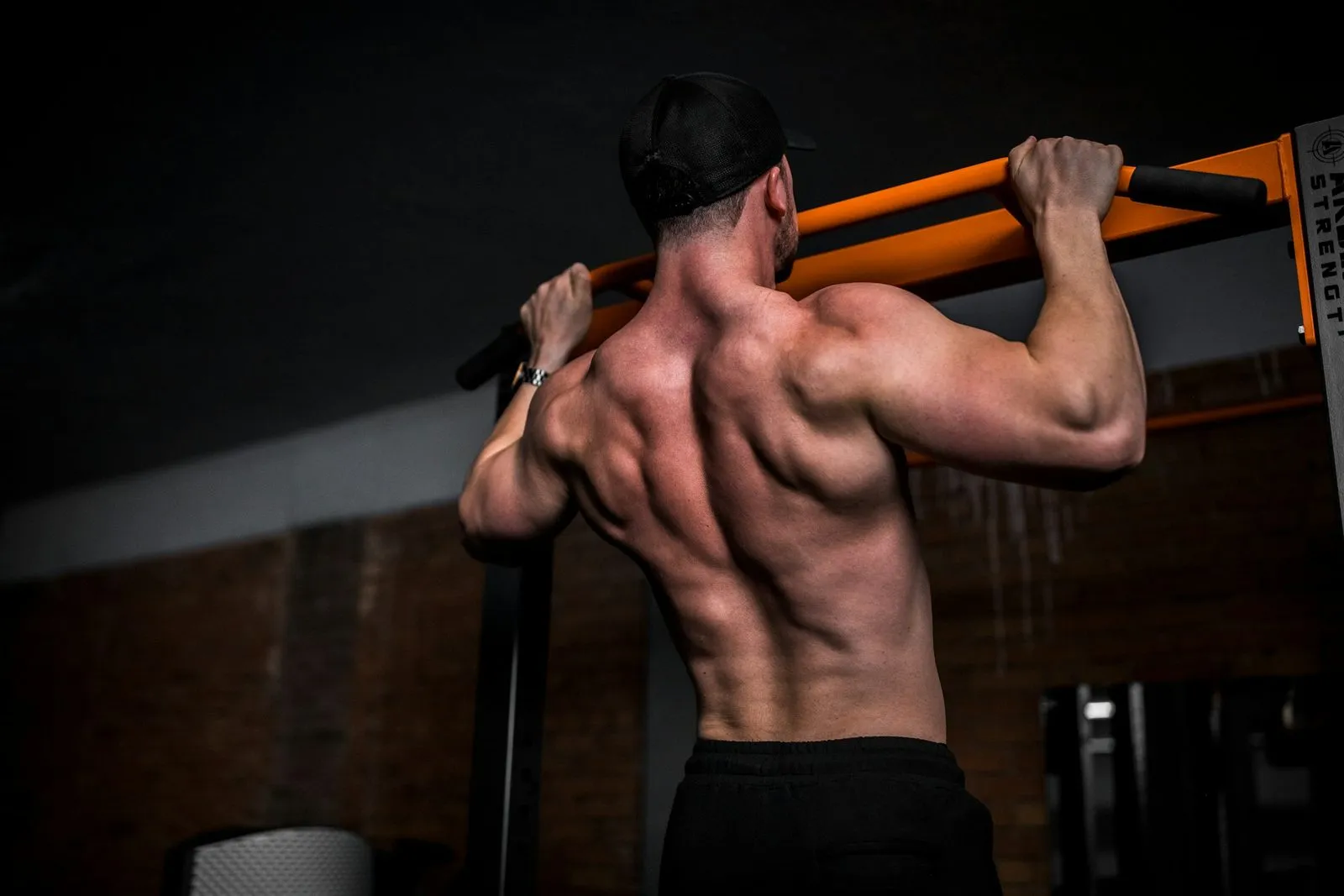
A complete calisthenics back workout: the best bodyweight back exercises for lats, upper and lower back, routines with and without a bar, and how to progress.
A strong back is what makes calisthenics work: it carries your pull-ups, protects your shoulders on push-ups and dips, and holds you in every skill from the front lever to the human flag. And the back is one of the easiest muscle groups to train hard with bodyweight alone, as long as you go beyond a few sloppy pull-ups at the end of a session.
The short answer: a complete calisthenics back workout combines a vertical pull (pull-ups or chin-ups, or negatives if you can’t do one yet), a horizontal pull (inverted rows), an upper-back and rear-shoulder exercise (face pulls with a band, Y-T-W raises, scapular pull-ups) and a lower-back exercise (bird dogs, Superman holds or reverse hyperextensions). Do 3 to 4 sets of each, two or three times a week, stopping each set 1 to 3 reps short of failure. When you pass about 12 to 15 clean reps, move to a harder variation. No bar? Table rows, door rows and prone raises build a solid back at home.
Below you’ll find which muscles to cover, the best exercises for each from easiest to hardest, four complete routines (beginner, intermediate, advanced and no bar) and the rules that keep your back growing. If you’d rather not plan it all, Titan Mode builds your weekly calisthenics sessions around your level and the equipment you have, back days included.
Can calisthenics build a big, strong back?
Yes. Pull-ups and rows load the back heavily: in a pull-up you lift almost your full bodyweight with your arms and back, which is more than most beginners can row with a barbell.
The research supports the approach. A meta-analysis found that muscle growth was similar across light and heavy loads when sets were taken close to failure, while heavy loads gave more maximal strength (Schoenfeld et al., 2017). In practice:
- Muscle is within reach with sets of 5 to 20 reps, as long as the last reps are hard.
- Harder variations replace extra weight. Archer pull-ups, one-arm row progressions or a backpack on your back keep the load rising.
- Volume matters. A dose-response meta-analysis found more muscle growth with more weekly sets, up to around 10 or more sets per muscle per week (Schoenfeld, Ogborn & Krieger, 2017). That’s why two or three pull sessions a week work better than one.
Where bodyweight training eventually falls short is very heavy pulling strength. The fix is simple: weighted pull-ups once you pass 10 to 12 strict reps.
The back muscles a workout must cover
| Muscle | What it does | Best bodyweight exercises |
|---|---|---|
| Latissimus dorsi (lats) | Pull the arms down and back | Pull-ups, chin-ups, archer pull-ups, straight-arm pulldowns with a band |
| Trapezius and rhomboids (mid and upper back) | Pull the shoulder blades together | Inverted rows, scapular pulls, Y-T-W raises |
| Rear deltoids, rotator cuff | Pull the arms back, stabilize the shoulder | Face pulls with a band, reverse snow angels, wide rows |
| Spinal erectors (lower back) | Keep the spine straight, extend the trunk | Bird dogs, Superman holds, reverse hyperextensions |
| Biceps, forearms (helpers) | Bend the elbow, grip | Chin-ups, rows, dead hangs, bodyweight curls |
Pull-ups cover the lats well; rows are the best tool for the middle of the back. Most bodyweight routines forget the rear shoulders and lower back, which is where the extra exercises come in.
The best calisthenics back exercises, by movement
Each list goes from easiest to hardest. Start at the first variation you can’t do for 8 to 12 clean reps.
1. Vertical pull (lats)
- Dead hang and active hang: hang from the bar, then pull your shoulders down away from your ears without bending the elbows. Builds grip and shoulder control.
- Scapular pull-ups: from the hang, lift your body a few centimeters only with the shoulder blades.
- Band-assisted pull-ups or jumping pull-ups with slow negatives.
- Negative pull-ups: jump to the top, lower yourself in 3 to 5 seconds.
- Chin-ups (palms facing you): usually easier thanks to the biceps.
- Pull-ups (palms away): full range, chin over the bar, arms straight at the bottom.
- Wide-grip and archer pull-ups: more load on one side, a step toward the one-arm pull-up.
- Weighted pull-ups: a belt, vest or backpack.
Muscle activity studies show that both pull-ups and chin-ups recruit the lats strongly, with chin-ups drawing a bit more on the biceps and pectorals (Youdas et al., 2010). Use both: our chin-up vs pull-up guide explains how to split them. If you can’t do a pull-up yet, follow our first pull-up progression.
2. Horizontal pull (mid back)
- Incline rows on a high bar or rings, body almost upright.
- Inverted rows on a hip-height bar, knees bent.
- Inverted rows, legs straight, body in a line from heels to head.
- Feet-elevated rows: feet on a bench or box.
- Archer rows and one-arm row progressions.
The inverted row is the most underrated back exercise in calisthenics. It trains the middle of the back and the rear shoulders, which pull-ups only partly reach, and balances all the pushing work. A study comparing rowing exercises also found that the inverted row loads the lower back far less than a bent-over barbell row (Fenwick et al., 2009), which makes it a good choice if your lower back is sensitive.
3. Upper back and shoulder health
- Band face pulls: pull a band toward your face with elbows high, 3 × 15 to 20.
- Y-T-W raises, lying face down on the floor or a bench: lift your arms in a Y, then a T, then a W, 2 × 8 of each.
- Reverse snow angels, face down: sweep your arms from your hips to overhead without touching the floor.
- Scapular pull-ups and scapular push-ups: small but effective for control of the shoulder blades.
4. Lower back
- Bird dog: on hands and knees, reach the opposite arm and leg, 3 × 8 per side with a 2-second pause.
- Superman hold: face down, lift arms and legs, 3 × 20 to 30 seconds.
- Reverse hyperextension on a sturdy table: hips on the edge, raise straight legs to body height, 3 × 10 to 15.
- Single-leg Romanian deadlift: also trains the hamstrings (see our calisthenics leg workout).
Calisthenics back workout routines by level
Rest 90 seconds to 2 minutes between sets of pulls, 60 seconds for smaller exercises. Do each routine 2 times a week, or once a week alongside full-body sessions that already include pulls.
Beginner (can’t do 5 pull-ups yet)
| Exercise | Sets × reps |
|---|---|
| Dead hang | 3 × 20 to 30 s |
| Scapular pull-ups | 3 × 8 |
| Negative pull-ups (or band-assisted) | 3 × 3 to 5 negatives of 3 to 5 s |
| Inverted rows, knees bent | 3 × 8 to 12 |
| Bird dog | 2 × 8 per side |
Intermediate (5 to 10 pull-ups)
| Exercise | Sets × reps |
|---|---|
| Pull-ups | 4 × 5 to 8 |
| Inverted rows, legs straight | 3 × 10 to 12 |
| Chin-ups | 3 × 6 to 10 |
| Band face pulls or Y-T-W raises | 3 × 15 |
| Superman hold | 3 × 20 to 30 s |
Advanced (more than 10 pull-ups)
| Exercise | Sets × reps |
|---|---|
| Weighted or archer pull-ups | 4 × 4 to 6 (per side for archers) |
| Feet-elevated or archer rows | 3 × 8 to 10 |
| Wide-grip pull-ups | 3 × 6 to 10 |
| Front lever tuck rows or holds | 3 × 5 to 8 |
| Reverse hyperextensions | 3 × 12 |
The front lever work in the advanced routine doubles as skill training: our front lever progression explains each step.
No bar at home
| Exercise | Sets × reps |
|---|---|
| Table rows (under a sturdy table) | 4 × 8 to 15 |
| Towel rows on a closed, locked door | 3 × 10 to 15 |
| Backpack bent-over rows (backpack filled with books) | 3 × 10 to 15 |
| Reverse snow angels | 3 × 10 |
| Superman hold | 3 × 20 to 30 s |
Check that the table can take your weight, and set up the door so you pull it into the frame, not open. Our no-equipment home workout shows these setups in detail and how to fit them into full-body sessions. A doorway pull-up bar costs little and is the best upgrade if you can install one.
How to keep progressing
Progressive overload is the core principle of any strength program (ACSM, 2009). With bodyweight, you have several levers:
- Reps: add a rep per set until you reach the top of the range.
- Harder variation: knees bent → legs straight → feet elevated for rows; chin-ups → pull-ups → archers → weighted for pulls.
- Tempo and pauses: 3-second lowering, 1-second pause at the top. Simple and brutally effective.
- Sets: move from 3 to 4 sets on your main pull.
- Load: a backpack or a weight belt once you pass 12 to 15 strict pull-ups.
The hard part is remembering what you did last week. Titan Mode lays out every session with its sets, reps and rest times, and lets you swap an exercise for a harder one when it gets too easy, so progression doesn’t depend on your memory.
Common mistakes in a bodyweight back workout
- Half reps. Stopping halfway down on pull-ups robs the lats of their stretch. Straight arms at the bottom, chin above the bar at the top.
- Kipping and swinging when the goal is strength. Keep the body still, legs together.
- Only vertical pulls. Pull-ups alone leave the mid back and rear shoulders undertrained. Rows are non-negotiable.
- Shrugging. Shoulders up near the ears load the neck. Start each rep by pulling the shoulders down.
- Pushing far more than pulling. Aim for at least as many sets of pulling as pushing each week.
- Forgetting the lower back. One or two sets of bird dogs or Supermans are enough to complete the picture.
Safety and limits
- Elbows and the tendon on the inside of the elbow often get sore when pull volume jumps. Increase sets gradually and alternate grips.
- Shoulder pain that is sharp or that wakes you at night is a reason to stop and see a professional, not to push through.
- Lower back: if you have back pain, prefer bird dogs and inverted rows, and avoid big arches during Superman holds. Get medical advice if pain spreads into the leg.
- Equipment: check bars, tables and doors before loading them with your full weight.
Where to go next
A calisthenics back workout doesn’t need machines. It needs a vertical pull, a horizontal pull, some upper-back work and a bit of lower back, each pushed to a variation that’s hard for you, two or three times a week.
Keep your pushing in balance too: for every back session, a calisthenics chest workout with push-ups and dips protects your shoulders and rounds out your upper body.
Once your pulling base is solid, it opens the door to skills: the muscle-up, the front lever and the human flag all depend on a strong back. And if you want a plan that schedules all of it, from your first negatives to weighted pull-ups, Titan Mode puts your sessions, nutrition and progress in one place.
This article is general information, not medical advice. If you have a medical condition, an injury, pain or are pregnant, talk to a health professional before changing your training or diet.
FAQ
Can you build a big back with calisthenics?
Yes. Pull-ups, chin-ups and rows are among the best back builders there are, and research shows that muscle grows with light or heavy loads as long as sets are taken close to failure. You keep progressing by moving to harder variations (archer pull-ups, feet-elevated rows, weighted pull-ups) rather than by adding plates.
How many times a week should I train my back with calisthenics?
Two to three sessions a week works for most people, either as dedicated pull days or as the pulling part of full-body workouts. Aim for roughly 10 to 20 hard sets of back work per week in total, starting at the lower end if you're a beginner.
How do I train my back without a pull-up bar?
Use horizontal rows under a sturdy table, rows with a towel on a closed door, and backpack rows, then add prone exercises such as Y-T-W raises, reverse snow angels and Superman holds. They don't fully replace pull-ups, but they build real strength in the lats, upper back and rear shoulders.
Which calisthenics exercise is best for the lats?
The pull-up and the chin-up are the main lat builders. Studies of muscle activity show high latissimus dorsi activation in both grips. Wide-grip and archer pull-ups add a bit more emphasis on the lats, while chin-ups bring in more biceps.
How do I train my lower back with calisthenics?
Your lower back already works in every row, hollow body and leg exercise. Add one or two specific exercises such as bird dogs, Superman holds, reverse hyperextensions on a table or single-leg Romanian deadlifts, for 2 to 3 sets, two times a week.
How many sets and reps for a calisthenics back workout?
Three to four sets per exercise, between about 5 and 20 reps, with the last reps of each set feeling hard. Once you can do more than 12 to 15 clean pull-ups or 20 rows, move to a harder variation instead of adding endless reps.
Sources
- American College of Sports Medicine (2009). Position stand: progression models in resistance training for healthy adults. Med Sci Sports Exerc.
- Schoenfeld B.J. et al. (2017). Strength and hypertrophy adaptations between low- vs. high-load resistance training: a systematic review and meta-analysis. J Strength Cond Res.
- Schoenfeld B.J., Ogborn D., Krieger J.W. (2017). Dose-response relationship between weekly resistance training volume and increases in muscle mass: a systematic review and meta-analysis. J Sports Sci.
- Youdas J.W. et al. (2010). Surface electromyographic activation patterns and elbow joint motion during a pull-up, chin-up, or perfect-pullup rotational exercise. J Strength Cond Res.
- Fenwick C.M., Brown S.H., McGill S.M. (2009). Comparison of different rowing exercises: trunk muscle activation and lumbar spine motion, load, and stiffness. J Strength Cond Res.