Weighted Pull-Ups: When to Start, How Much, Program
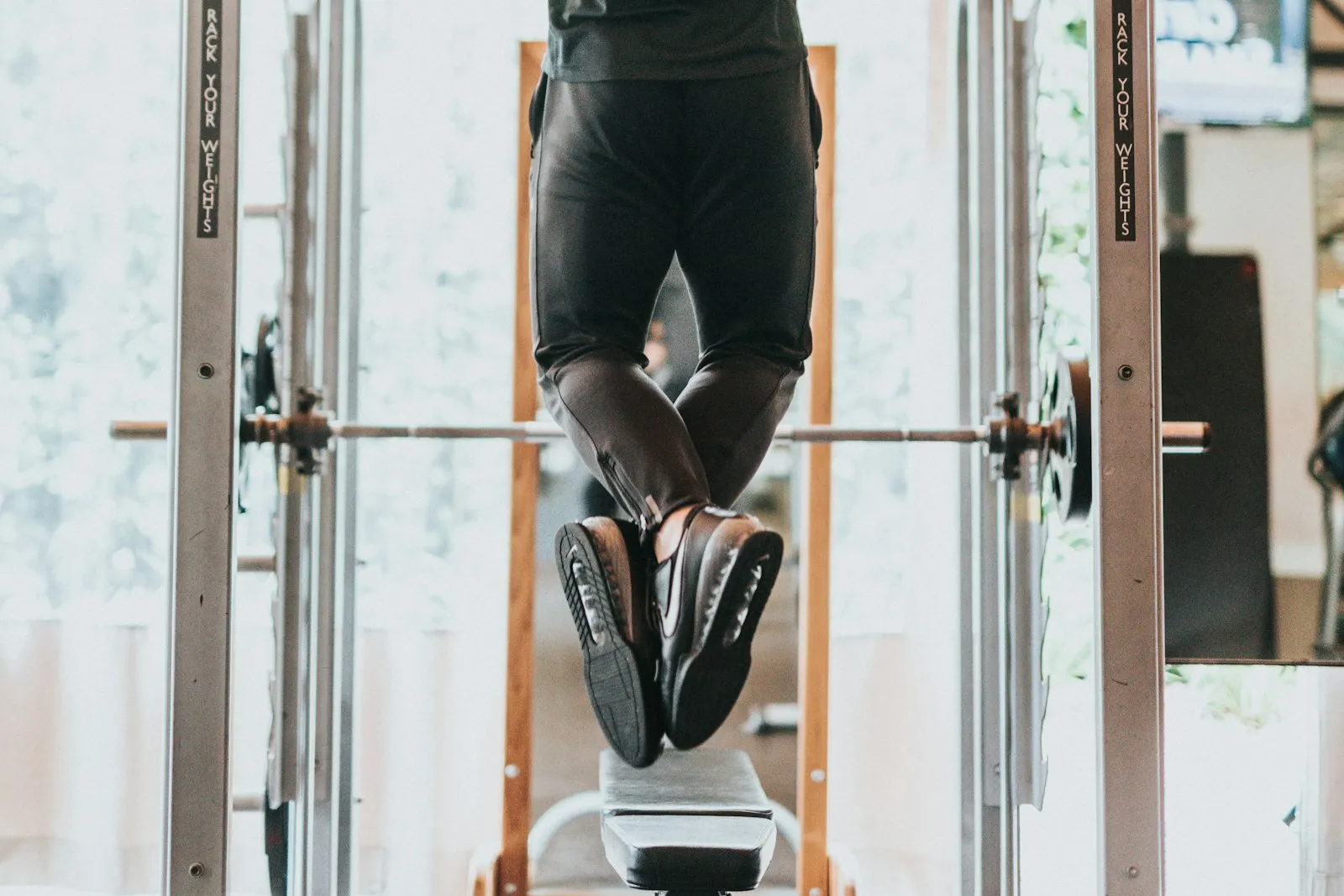
When you're ready for weighted pull-ups, how much weight to start with, belt vs vest vs backpack, an 8-week program and the strength standards worth aiming for.
There’s a point where pull-ups stop feeling like a fight. You can do ten in a row, then twelve, then fifteen, and each extra rep takes longer to earn while doing less for your strength. That’s usually the moment to add weight. Weighted pull-ups are the simplest way to keep progressing on the bar: same movement, more resistance, fewer reps.
The short answer
Start weighted pull-ups once you can do 8 to 10 strict pull-ups in one set. Add a small load, 2.5 to 5 kg (5 to 10 lb), with a dip belt, a vest or a backpack, and do 3 to 5 sets of 3 to 6 reps, stopping one or two reps before failure. Train them once or twice a week, and add weight only when you hit the top of your rep range on every set with clean form. Most people can keep adding 1 to 2.5 kg every week or two for months before progress slows.
The rest of this guide covers when you’re really ready, which equipment to use, how to choose your first load, an 8-week program and the mistakes that cause elbow pain. If you’d like your pulling days laid out for you, Titan Mode builds a strength plan around the bar you have and the sessions you can actually do.
Are you ready to add weight?
Adding load to a weak movement only makes it weak and heavy. Before you clip on a plate, check these benchmarks:
| Benchmark | Target |
|---|---|
| Strict pull-ups, one set | 8–10 reps, full hang to chin over bar |
| Training volume | 3 × 8 with good form |
| Dead hang | 45–60 s, shoulders active |
| Controlled negative | 5 s lowering, no drop at the bottom |
| Elbows and shoulders | No pain during or after pulling sessions |
If you’re not there yet, the faster path is still bodyweight work. Our guide on how to do pull-ups, from zero to your first 10 reps covers exactly that stretch. A strict rep means a full hang at the bottom, no kick, no swing, and the chin clearly above the bar. If your reps need a little kip to finish, the load will expose it.
Why add weight at all?
Three good reasons, and one bad one.
- Long sets stop building strength efficiently. A set of 15+ pull-ups trains muscular endurance as much as strength. Adding weight brings you back to the 3 to 8 rep range, where maximal strength improves fastest. The ACSM position stand on resistance training recommends heavier loads and lower reps for strength once you’re past the beginner stage.
- Your sessions get shorter. Five hard sets of 5 take a lot less time than five sets of 15.
- It carries over to harder skills. Strong weighted pulls make the explosive pull of a muscle-up easier, and they help the pulling side of the front lever. It’s not a substitute for skill practice, but more raw strength makes every pulling skill feel lighter.
The bad reason is assuming that weight is required for muscle growth. A meta-analysis by Schoenfeld and colleagues found similar muscle growth with low and high loads when sets were taken close to failure; heavy loads mainly won on maximal strength. So if your goal is a bigger back and you enjoy sets of 12, that works too. Weighted pull-ups make hard sets more practical, not more magical.
Muscles worked
Weighted pull-ups train the same muscles as regular pull-ups, just harder: the lats do most of the work, helped by the biceps and brachialis at the elbow, the middle and lower traps and rhomboids around the shoulder blades, the rear deltoids and the forearm and grip muscles. Your core works more than usual, because a hanging weight tends to make you swing or arch. An EMG study by Dickie and colleagues found that grip width and hand orientation shift activation between the lats and biceps only modestly; all variations load the back and arms together. If you want the details of overhand vs underhand, read our chin-up vs pull-up comparison. Weighted chin-ups follow the same rules as everything below.
Equipment: belt, vest, backpack or dumbbell
| Option | Best for | Pros | Cons |
|---|---|---|---|
| Dip belt + plates | Most people, any load | Small jumps, goes very heavy, weight hangs below the hips | Chain can swing; you need plates |
| Weighted vest | Light loads, home training | Comfortable, keeps weight close to the body | Usually caps at 10–20 kg, can limit breathing at the top |
| Backpack | Starting at home | Free, use books or water bottles | Shifts around, uncomfortable above ~10 kg |
| Dumbbell between feet | Gym without a belt | No extra gear | Hard to hold, changes body position, risky to drop |
A dip belt is the best long-term buy if you also train dips: the same belt serves both. For the rest of your setup (bar, rings, bands), see our calisthenics equipment guide. Whatever you use, keep the load centered and still. If the weight swings, you’re spending effort fighting it instead of pulling.
How to set up
- Belt: thread the chain through a plate and clip it so the plate hangs at mid-thigh height when you hang. Shorter chain means less swing.
- Getting on the bar: with a belt, step up on a box or bench, grab the bar, then step off slowly. Don’t jump up with a plate between your legs.
- Getting off: lower to a full hang, then put your feet back on the box. Never let go at the top or drop with the weight attached.
How much weight to start with
Use the lightest load that turns your bodyweight set of 8 to 10 into a set of 5 or 6. For most people that’s 2.5 to 5 kg (5 to 10 lb). A practical test:
- Warm up with a few light sets (see the session below).
- Add 2.5 kg and do a set of 5.
- If it felt like you had 3 or more reps left, add 2.5 kg next set. If you had about 2 left, that’s your starting load.
This “reps in reserve” approach (RIR) is how most strength coaches regulate effort. Helms and colleagues describe it as a practical way to choose loads day to day: stopping 1 to 3 reps before failure keeps quality high and recovery manageable. A useful rule: if the last rep of the set is slower than the first by a lot, or your chin barely clears the bar, you’re at or near failure.
How to do a weighted pull-up with good form
- Start from a full hang. Arms straight, shoulders not shrugged into the ears.
- Brace. Squeeze the glutes and pull the ribs down slightly so the weight doesn’t pull you into an arch. Legs straight or slightly in front.
- Pull the shoulder blades down first, then drive the elbows toward the ribs.
- Chin over the bar, without craning the neck forward.
- Lower under control, about 2 seconds, all the way back to a full hang.
The weight makes cheating more tempting. The most common tells: half reps that stop with bent arms at the bottom, kicking to get through the sticking point, and swinging to build momentum. If any of these appears, the load is too heavy for that day.
How to progress: double progression
The simplest method is double progression: pick a rep range, build up to the top of it, then add load.
- Choose a range, for example 3 sets of 4 to 6 reps.
- Start at 4 reps per set with your new load.
- Each session, try to add a rep to one or more sets.
- When you hit 3 × 6 with clean form, add 1 to 2.5 kg and go back to 3 × 4.
That’s slow on purpose. Your muscles adapt faster than the tendons around your elbow, which Magnusson and Kjaer’s review describes well: tendon tissue remodels over months, not weeks. Small, regular jumps protect it. If you don’t have small plates, a backpack with a 1 kg water bottle, ankle weights or a light dumbbell hooked on the chain works as a micro-plate.
An 8-week weighted pull-up program
Two pulling sessions a week, at least two days apart. Day A is heavy and weighted; Day B is bodyweight volume. Rest 2 to 3 minutes between weighted sets.
| Week | Day A (weighted) | Day B (bodyweight) |
|---|---|---|
| 1 | 3 × 4 at starting load | 3 × 8 pull-ups + 3 × 10 rows |
| 2 | 3 × 5 | 3 × 8 chin-ups + 3 × 10 rows |
| 3 | 3 × 6 | 4 × 8 pull-ups |
| 4 | Load +1–2.5 kg, 3 × 4 | 3 × 8, slow 3 s negatives |
| 5 | 4 × 4 | 3 × 10 chin-ups |
| 6 | 4 × 5 | 4 × 8 pull-ups |
| 7 | 4 × 6 or load +1–2.5 kg | 3 × 8 + 3 × 12 rows |
| 8 | Lighter week: 3 × 3 at week 1 load | 2 × 8, easy |
After week 8, test a heavy set of 3 or a single with good form if you want a number, then start the next block from your new working load. If you miss reps two sessions in a row, don’t force it: take a lighter week, then restart a little below your last load.
Keep the rows on Day B. Inverted rows balance all the vertical pulling and are easy on the elbows.
A full Day A session
- Warm-up (8–10 min): arm circles, band pull-aparts or scapular pulls, 30 s dead hang.
- Ramp-up sets: 5 bodyweight pull-ups, then 2–3 reps at half your working load.
- Weighted pull-ups: your sets for the week.
- Accessory: 3 × 8–10 weighted or bodyweight dips or push-ups.
- Core: 3 × 20–30 s hollow body hold or hanging knee raises.
Writing down each set matters more than people think: load, reps and how many you had left. In Titan Mode, every session lists your sets, reps and rest times, and you log what you actually did, so next week’s numbers are already there when you step under the bar.
Weighted pull-up standards
There are no official standards. These are rough calisthenics benchmarks for one strict rep, expressed as added weight relative to your body weight:
| Level | Added load, 1 rep | Example at 75 kg |
|---|---|---|
| Starting out | 10% | +7.5 kg |
| Solid | 25% | +19 kg |
| Advanced | 50% | +37.5 kg |
| Elite | 75%+ | +56 kg and up |
Lighter, shorter-armed lifters usually find relative loads easier; heavier or taller people find them harder. Compare yourself to your log from three months ago, not to these numbers.
Common mistakes
- Starting before you’re ready. If you can’t do 8 strict reps, weight will turn every set into a grind with shortened reps.
- Jumping load too fast. 5 kg jumps add up quickly and are the usual cause of elbow pain on the inner or outer side.
- Training to failure every set. Leave one or two reps in the tank. Grinding the last rep with a plate attached is where form breaks.
- Half reps. If the arms don’t straighten at the bottom, it’s not the same exercise, and your numbers lie.
- Doing all your pulling weighted. Keep bodyweight volume and rows. Heavy-only training wears joints faster.
- Skipping the warm-up. Ramp up to the working load; never start a session with your heaviest set.
Safety and limits
- Elbow pain is the main warning sign. Pain on the inside of the elbow (often called golfer’s elbow) or the outside, especially at the start of the pull, means the load or volume rose too fast. Drop the weight for two weeks and keep bodyweight sets pain-free.
- Shoulder pain at the bottom usually comes from dropping into the hang passively. Control the last centimeters.
- Check your equipment. Inspect the belt chain and carabiner, and make sure the bar can take your weight plus the load. Door-frame bars are often rated for a limited weight; read the label.
- Teens and beginners don’t need weighted pull-ups. Bodyweight progressions build plenty of strength for the first year or two.
- If you have a current shoulder or elbow injury, see a physiotherapist or doctor before loading the movement.
Where to go next
Weighted pull-ups pair naturally with weighted dips: same belt, one pull day and one push day. If you’re working toward a muscle-up, keep one explosive session a week (pull-ups as high as possible) alongside the heavy work. And if static skills tempt you, the planche progression is the pushing counterpart of the front lever.
Weighted pulls, planned week by week
The hard part of weighted pull-ups isn’t the effort, it’s the patience: small jumps, honest reps and enough rest. Titan Mode builds your plan around your goal, the number of sessions you can do and the equipment you have, including a pull-up bar or dip bars, and guides each session with sets, reps and rest times. Your logs show you when a load has become easy, so the next step is based on what you did, not on a guess.
This article is general information, not medical advice. If you have a medical condition, an injury, pain or are pregnant, talk to a health professional before changing your training or diet.
FAQ
How many pull-ups should I do before adding weight?
A good benchmark is 8 to 10 strict pull-ups in one set, with a full hang at the bottom and the chin over the bar at the top, and around 3 sets of 8 on a normal training day. Below that, adding reps with your body weight is still the faster and safer route.
How much weight should I start with for weighted pull-ups?
Start light: 2.5 to 5 kg (5 to 10 lb) for most people. The first load should let you do clean sets of 5 with one or two reps left in reserve. You can always add more next week; starting too heavy mostly ruins your form and your elbows.
Is a weighted vest or a dip belt better for pull-ups?
A dip belt with a chain and plates is the most practical for heavy loads and small jumps. A vest is comfortable for light loads and keeps the weight close to the body, but most vests stop at 10 to 20 kg. A backpack with books or water bottles works fine to start at home.
How often should I do weighted pull-ups?
Once or twice a week is enough for most people, with at least 48 hours between two heavy pulling sessions. The rest of your pulling volume can stay bodyweight: rows, chin-ups and lighter pull-up sets.
Do weighted pull-ups build more muscle than bodyweight pull-ups?
Not automatically. Muscle growth comes from hard sets close to failure, and research shows similar hypertrophy across a wide range of loads. Weighted pull-ups make that easier once bodyweight sets get very long, and they build more maximal strength. They are a tool, not a requirement.
What is a good weighted pull-up?
There is no official standard. As a rough calisthenics benchmark, a single rep with 25% of your body weight added is solid, 50% is advanced, and 75% or more is elite. Treat these as orientation, not a test you must pass.
Sources
- American College of Sports Medicine. Progression models in resistance training for healthy adults. Med Sci Sports Exerc, 2009
- Schoenfeld BJ, Grgic J, Ogborn D, Krieger JW. Strength and hypertrophy adaptations between low- vs. high-load resistance training: a systematic review and meta-analysis. J Strength Cond Res, 2017
- Helms ER, Cronin J, Storey A, Zourdos MC. Application of the repetitions in reserve-based rating of perceived exertion scale for resistance training. Strength Cond J, 2016
- Dickie JA, Faulkner JA, Barnes MJ, Lark SD. Electromyographic analysis of muscle activation during pull-up variations. J Electromyogr Kinesiol, 2017
- Magnusson SP, Kjaer M. The impact of loading, unloading, ageing and injury on the human tendon. J Physiol, 2019