Calisthenics Arm Workout: Biceps and Triceps, No Weights
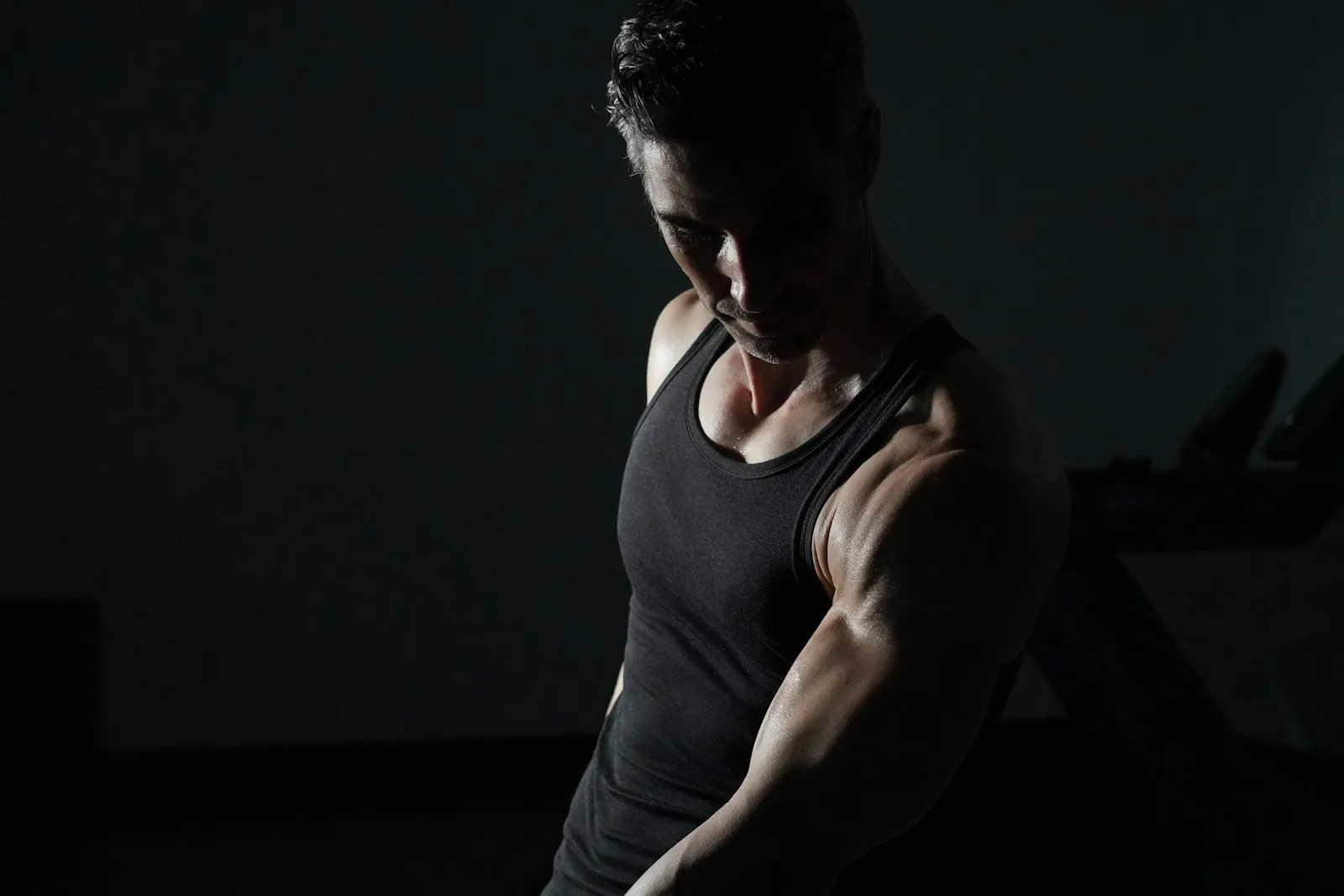
A calisthenics arm workout for biceps and triceps without weights: the best bodyweight arm exercises, routines with and without a bar, and how to progress.
You can build strong, visibly bigger arms without a single dumbbell. Your biceps already work hard every time you pull your body up, and your triceps every time you push it away from the floor or the bars. What most bodyweight arm routines get wrong is relying on easy push-ups and a few chair dips forever, and never giving the biceps anything heavy to do.
The short answer: a complete calisthenics arm workout pairs one heavy compound exercise for each muscle (chin-ups or underhand rows for the biceps, dips or diamond push-ups for the triceps) with one direct exercise for each (a bodyweight curl and a bodyweight triceps extension). Do 3 sets of each in the 5 to 15 rep range, two or three times a week, stopping 1 to 3 reps short of failure. When you reach the top of the range on every set, switch to a harder variation. The triceps are easy to train with nothing at all; the biceps are much easier to train with a bar, rings or at least a sturdy table.
Below: how your arm muscles work, the best bodyweight biceps and triceps exercises from easiest to hardest, four routines (beginner, intermediate, advanced and no-bar at home), and how to keep progressing without wrecking your elbows. If you’d rather have it planned for you, Titan Mode builds your weekly calisthenics sessions around your level and the equipment you have, arm work included.
Can you build big arms with calisthenics?
Yes, with the same limits as any natural training: it takes months, enough food and steadily harder exercises.
- Muscle grows with light or heavy loads as long as sets are taken close to failure. A meta-analysis found similar growth across load ranges, while heavier loads still gave more maximal strength (Schoenfeld et al., 2017). Your bodyweight is plenty of load for the arms if you choose the right leverage.
- Weekly volume matters. More hard sets per muscle per week produced more growth, up to roughly 10 or more sets (Schoenfeld, Ogborn & Krieger, 2017). Pull and push sessions already give your arms a good share of that; direct work tops it up.
- Grip changes the job. In an EMG study, the chin-up (underhand) produced higher biceps activity than the overhand pull-up (Youdas et al., 2010). For push-ups, a narrow hand position increased triceps activity compared with a wide one (Cogley et al., 2005).
The honest limit: the biceps have fewer pure bodyweight isolation options than the triceps, and progressing them without a bar or rings is awkward. That’s why the routines below change depending on what you have, and why a bar or rings is the first thing worth buying (see our calisthenics equipment guide).
How your arm muscles work (and what that means for exercises)
You don’t need anatomy class, just three ideas.
Biceps. They bend the elbow and turn the palm up (supination). So they work hardest when you pull with your palms facing you: chin-ups, underhand rows and curls. The brachialis and brachioradialis, which sit under and next to the biceps and add a lot of arm thickness, work hard with a neutral (palms facing each other) or overhand grip.
Triceps. They straighten the elbow and are a bigger muscle than the biceps, so they matter more for arm size than most people think. The long head also crosses the shoulder, which means it gets stretched when your arm is overhead. In a 12-week study, elbow extensions done with the arm overhead grew the triceps noticeably more (about 1.4 times) than the same exercise done with the arm by the side (Maeo et al., 2022). In calisthenics, the bodyweight triceps extension and pike-style presses put the arm in a similar overhead position.
Forearms and grip. Every hang, pull and support hold trains them. You rarely need extra work; dead hangs are enough if your grip limits your pull-ups. For dedicated forearm work, with or without a bar, see our grip strength exercises.
The best bodyweight biceps exercises, from easiest to hardest
Move up a rung when you can do 3 clean sets at the top of the rep range.
No bar needed
- Isometric self-resistance curl. Grab one wrist with the other hand and curl against it as hard as you can for 20 to 30 seconds, at different elbow angles. Useful when you have nothing else, but hard to measure and progress.
- Towel or door-frame curl. Loop a towel around a fixed post, railing or a solid door handle (door locked and stable), lean back with straight body, and curl yourself in. Walk your feet forward to make it harder.
- Underhand table row. Lie under a sturdy table, grip the edge palms facing you and row your chest to the edge. Only use a table that can’t tip: test it first. Our inverted row guide covers the setup and every variation.
With a bar or rings
- Underhand inverted row on a low bar or rings, elbows tucked. The lower the bar and the more horizontal your body, the harder it gets.
- Chin-up negatives. Jump to the top with palms facing you and lower yourself over 3 to 5 seconds.
- Chin-ups. The main biceps builder in calisthenics. Our comparison of chin-ups vs pull-ups explains exactly how the grip shifts the work between back and biceps.
- Bodyweight bar curl. On a bar at about hip or chest height, hold it underhand, lean back with straight arms, then curl your forehead toward the bar by bending only at the elbows. Body angle sets the difficulty.
- Ring or suspension-strap curl. Same idea with rings; the free hand position lets you turn the palms up during the rep, which the biceps like.
Advanced
- Close-grip chin-up with a slow lowering (3 to 4 seconds), or a pause with the chin over the bar.
- Weighted chin-ups. A backpack, vest or dipping belt. See our weighted pull-ups guide for when to start and how much to add.
- Archer chin-ups and one-arm chin-up progressions, for people who can already do 12 to 15 strict chin-ups.
The best bodyweight triceps exercises, from easiest to hardest
No bar needed
- Incline close-grip push-up with hands on a table or counter, shoulder-width or a bit narrower, elbows brushing your ribs.
- Close-grip push-up on the floor. Hands under the shoulders, elbows tucked. You don’t need the hands touching in a diamond for it to hit the triceps hard.
- Diamond push-up. Index fingers and thumbs forming a diamond under the chest. Harder on the triceps, but some people’s wrists and elbows dislike it; if so, stay with the close-grip version.
- Floor or table triceps extension. In an incline push-up position with forearms on a table or bench edge, lower your forearms down so the elbows bend, then push back to straight arms using only the triceps. The lower the support, the harder it is.
With bars or rings
- Parallel bar dips, torso upright and elbows close to target the triceps. Our dips progression goes from support holds to full reps. Avoid bench dips with your hands behind you on a chair: they put the shoulder in an extreme position for very little benefit.
- Bodyweight bar triceps extension (also called a “skull crusher” on the bar): hands on a bar at chest or hip height, lean forward on straight arms, bend only at the elbows to bring your forehead under the bar, then extend. Arms end up close to overhead, which stretches the long head.
- Ring triceps extension, same pattern, harder because the rings move.
- Pike push-ups with elbows tucked. They are mainly a shoulder exercise, but the triceps finish every rep in an overhead position. See our pike push-up guide, or our calisthenics shoulder workout if you want to train the shoulders themselves.
Advanced
- Weighted dips with a backpack or belt.
- Ring dips, much more demanding on stability.
- Korean dips, impossible dips and wall handstand push-ups, which only make sense once regular dips are solid and pain-free.
Calisthenics arm workout routines by level
Each routine can be done as a dedicated arm session or tacked on to the end of a pull or push day. Rest about 90 seconds between sets of compound moves and 60 seconds between isolation sets. Supersets (one biceps exercise followed straight away by one triceps exercise) save time without hurting results much.
Beginner arm workout (no pull-ups yet)
- Underhand inverted row (table or low bar): 3 × 6 to 12
- Incline close-grip push-up: 3 × 8 to 15
- Chin-up negatives: 3 × 3 slow reps (if you have a bar)
- Floor or table triceps extension: 2 × 8 to 12
- Dead hang: 2 × 20 to 40 s
Two or three times a week. This is also the stage where your arms progress fastest: the first months of training mostly teach your nervous system to use the muscle you already have.
Intermediate arm workout
- Chin-ups: 4 × 5 to 10
- Parallel bar dips: 4 × 6 to 12
- Bodyweight bar curl: 3 × 8 to 12
- Bodyweight bar triceps extension: 3 × 8 to 12
- Diamond or close-grip push-ups: 2 sets, stop 1 to 2 reps before failure
Advanced arm workout
- Weighted chin-ups: 4 × 4 to 8
- Weighted dips or ring dips: 4 × 5 to 10
- Ring curl, slow lowering: 3 × 8 to 12
- Ring triceps extension: 3 × 8 to 12
- Archer chin-up or chin-up pause hold: 2 to 3 sets
No-bar arm workout at home
- Underhand table row: 4 × 6 to 12
- Towel or door-frame curl: 3 × 10 to 15
- Close-grip push-up (or diamond): 4 × 8 to 15
- Table triceps extension: 3 × 8 to 12
- Isometric self-resistance curl: 2 × 30 s per arm
Test any table, door or railing with your full weight before you rely on it. For a full-body version of this setup, see our calisthenics workout at home with no equipment.
Where arm work fits in your week
Most people don’t need a separate “arm day”:
- Full body, 3 times a week: add one biceps and one triceps exercise, 2 sets each, at the end of each session. Our beginner calisthenics program already includes the compound moves.
- Push / pull / legs: put biceps work at the end of pull days, after rows and chin-ups from the calisthenics back workout, and triceps work at the end of push days, after the calisthenics chest workout.
- Upper / lower: one biceps and one triceps exercise per upper session.
The hard part isn’t choosing exercises, it’s knowing what to do this week compared with last week. Titan Mode lays out each session with sets, reps and rest times, and lets you swap an exercise for one that fits your equipment, so your arm work stays on track.
How to keep your arms progressing
Use double progression, which is also what the American College of Sports Medicine describes for resistance training:
- Reps first. Pick a range (for example 6 to 12). Add a rep or two from session to session.
- Then difficulty. When every set reaches the top of the range, make the exercise harder: lower the bar, change body angle, slow the tempo, move to the next variation or add weight.
- Then sets, slowly. If progress stalls after several weeks, add one set per exercise rather than doubling volume overnight.
Log every session: exercise, variation, sets and reps. Arms change slowly, and without a log it’s easy to repeat the same workout for months. For realistic expectations of how fast size comes, our article on how much muscle you can build in a year gives honest numbers, and arm size is very sensitive to total body weight and protein intake. Our calisthenics diet plan covers the protein side.
Common mistakes in bodyweight arm training
- Only doing push-ups. Push-ups train the triceps but leave the biceps almost untouched. Every arm routine needs a pulling exercise with the palms facing you.
- Kipping or swinging chin-ups. Momentum takes the work away from the arms. Control the lowering phase.
- Shortening the range. Half reps on dips and curls cut out the stretched position, which is where muscles seem to respond well. Go through the full range you can control without pain.
- Bench dips behind the back. Popular, but they push the shoulder into deep extension with the arm rotated inward. Parallel bar dips or close-grip push-ups are safer choices.
- Flared elbows on close-grip push-ups. Keep elbows tucked toward the ribs; flaring shifts the work to the chest and stresses the shoulders.
- Too much elbow volume, too fast. Tendons adapt more slowly than muscles. Add sets gradually, especially for dips, extensions and weighted chin-ups.
Safety and limits
- Elbows: pain on the inside of the elbow (common with lots of chin-ups) or the outside (with lots of grip work) is usually a load problem. Reduce volume, switch to a neutral grip for a while and add load back slowly. Pain that lasts more than a couple of weeks needs a professional opinion.
- Wrists: if diamond push-ups or extensions hurt, use push-up handles or fists to keep the wrists straight, or widen the hands slightly.
- Shoulders: for dips, start with a depth where the upper arm is about parallel to the floor and only go deeper if it’s comfortable.
- Improvised equipment: tables, door frames and railings must be completely stable. Never use folding furniture or a door that can swing.
If you have a joint injury, high blood pressure or another health condition, check with your doctor before starting heavy arm work.
Putting it into practice
Choose the routine that matches your level and equipment, run it for six to eight weeks, and write down every set. Pull with your palms up for the biceps, press with your elbows tucked for the triceps, add one direct exercise for each, and make everything a bit harder each time you hit the top of your rep range. That’s a calisthenics arm workout that actually builds arms. If you’d like the planning done for you, download Titan Mode for a calisthenics plan built around your week, your level and your equipment.
This article is general information, not medical advice. If you have a medical condition, an injury, pain or are pregnant, talk to a health professional before changing your training or diet.
FAQ
Can you build big arms with calisthenics?
Yes, within the same limits as any natural training. Chin-ups, rows, dips and close-grip push-ups load the biceps and triceps heavily, and research shows muscle grows with light or heavy loads as long as sets are taken close to failure. Add a few direct exercises such as bodyweight curls and triceps extensions, keep making them harder, and eat enough protein.
How do I train biceps without weights or a bar?
Without a bar, use a sturdy table for underhand inverted rows, a towel looped around a fixed post or door handle for curls, or isometric holds where one arm resists the other. These work, but a pull-up bar or a pair of rings makes biceps training far easier to progress, because chin-ups and ring curls can be made harder for years.
What is the best calisthenics exercise for triceps?
Dips and close-grip (diamond) push-ups are the main ones, because they let you press a large part of your bodyweight. Add a bodyweight triceps extension (on a bar, a table edge or rings) to train the long head of the triceps in a stretched position, which research suggests helps it grow.
How often should I train arms with calisthenics?
Your arms already work in every pull and push session. On top of that, 2 to 3 sets of direct biceps work and 2 to 3 sets of direct triceps work, two or three times a week, is enough for most people. More is not always better: elbows need time to adapt.
Are chin-ups enough for biceps?
For beginners and intermediates, chin-ups and underhand rows build a lot of biceps on their own. Once chin-ups become easy, add a direct exercise such as bodyweight bar curls or ring curls, or add weight to your chin-ups to keep the biceps progressing.
Why do my elbows hurt during calisthenics arm exercises?
Usually too much volume too soon, especially with dips, triceps extensions or high-rep chin-ups. Reduce the volume, warm up with light reps, avoid grinding painful reps, and add difficulty in small steps. Pain that persists for more than a couple of weeks deserves a visit to a health professional.
Sources
- Youdas J.W. et al. (2010). Surface electromyographic activation patterns and elbow joint motion during a pull-up, chin-up, or Perfect-Pullup rotational exercise. J Strength Cond Res.
- Dickie J.A. et al. (2017). Electromyographic analysis of muscle activation during pull-up variations. J Electromyogr Kinesiol.
- Cogley R.M. et al. (2005). Comparison of muscle activation using various hand positions during the push-up exercise. J Strength Cond Res.
- Maeo S. et al. (2022). Triceps brachii hypertrophy is substantially greater after elbow extension training performed in the overhead versus neutral arm position. Eur J Sport Sci.
- Schoenfeld B.J. et al. (2017). Strength and hypertrophy adaptations between low- vs. high-load resistance training: a systematic review and meta-analysis. J Strength Cond Res.
- Schoenfeld B.J., Ogborn D., Krieger J.W. (2017). Dose-response relationship between weekly resistance training volume and increases in muscle mass. J Sports Sci.
- American College of Sports Medicine (2009). Position stand: progression models in resistance training for healthy adults. Med Sci Sports Exerc.